
Futuro Fortissimo Archive
🎼 ff.58 Do bananas pollute too much?
How to cut and track the emissions of everyday activities
Published · Michele Merelli
- How much is a human life worth?
- Cycling pollutes more than a car (if we only eat asparagus)
- The cost (in CO2-eq) of a road accident
Themes🌍 Nature, climate and energy🏃 Health, sport and body🏛 Geopolitics, economy and society
🔟 ff.58.1 The cost of a human life
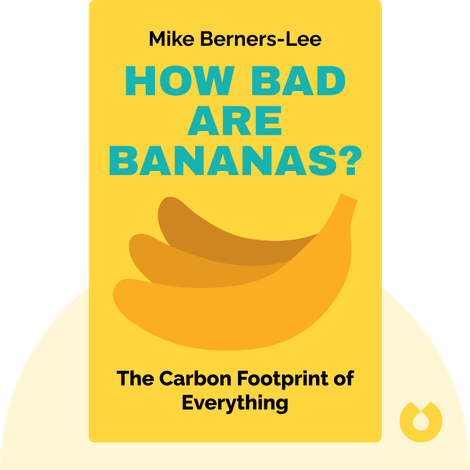
Substack ↗In How Bad Are Bananas?, Mike Berners-Lee, professor at Lancaster University, breaks down the ecological cost of practically everything. With chapters sorting objects and activities by g/kg/t of CO2 emitted, the author calculates the impact of: a mortgage, a road accident, the education system, etc…
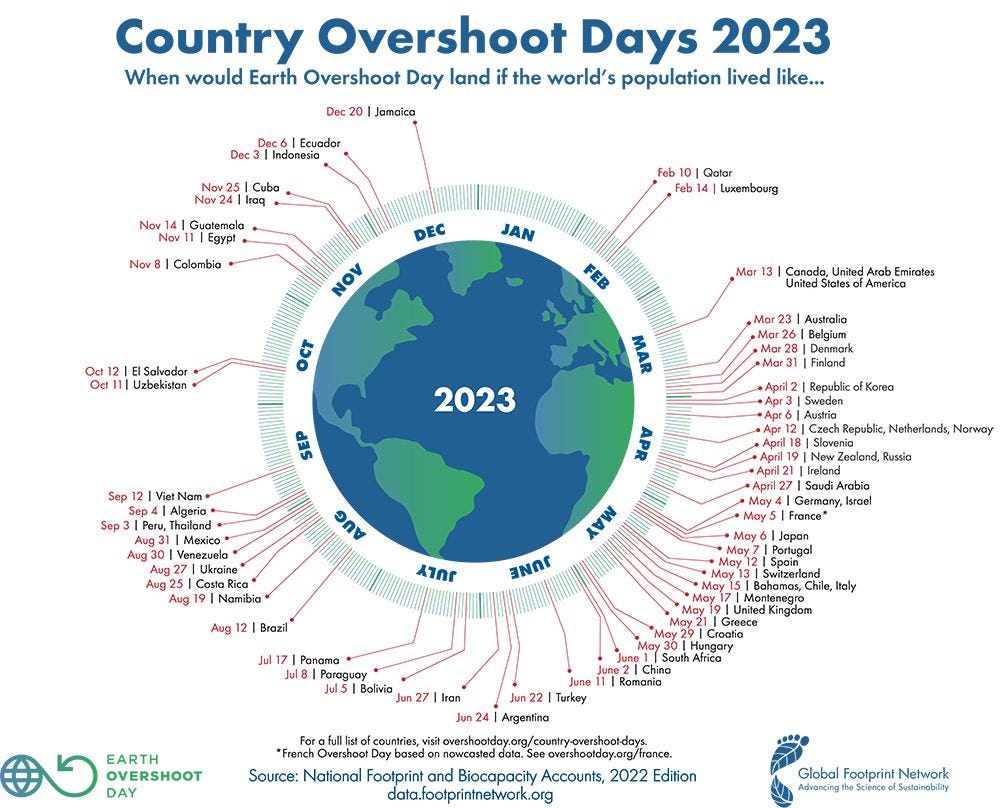
10 tonnes. If every citizen emitted this much CO2 (I'll skip the CO2eq distinction for simplicity), we'd see a 40% rise in emissions (forget 1.5°C) compared to the 51 billion kg of CO2 in 2020 (📉 ff.1.2 From 51 billion to 0).
Average tonnes of CO2 per citizen: 🇺🇸 | 28🇦🇺 | 30🇬🇧 | 15🇨🇳 | 3🇲🇼 | 0. 1🌎 | 7
The average European emits 15 tonnes. According to the author, even being very careful about food and lifestyle choices, it would be hard to get below 3 tonnes: there are so many “fixed costs” tied to a “first world” standard of society, between available services, education and healthcare.
€2,700 or 150 t of CO2. That's the cost of a human life, considering the number of deaths from climate change (see also ⚫ff.16.3 The (black) market for CO2). In practice, UK citizens are worth about 5% of the GDP they generate.
🕹️ ff.58.2 Emissions Minecraft
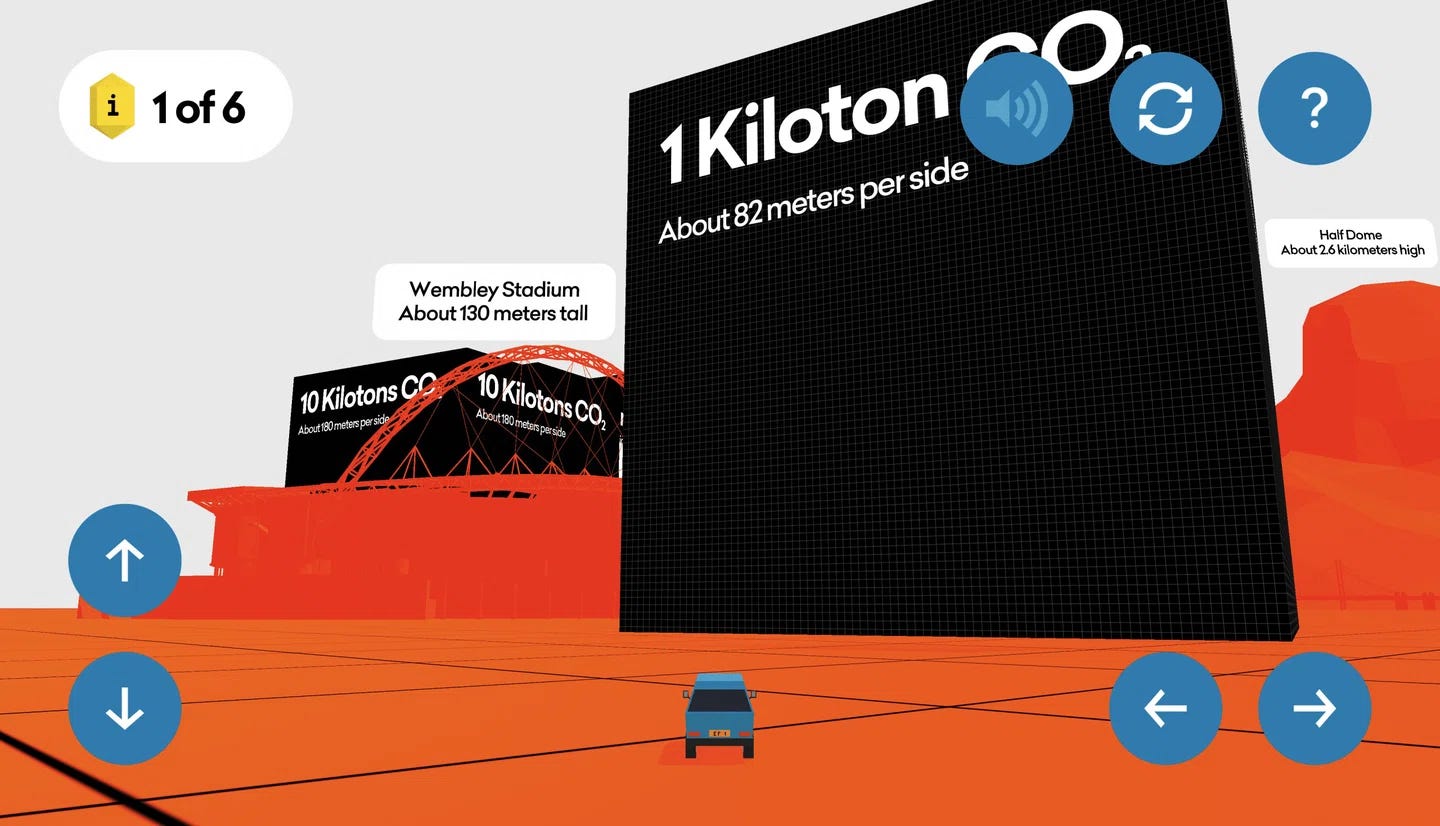
Substack ↗If you want a visual idea of what 10 tonnes look like, gaze at the Po Valley from the Orobic Prealps (but if you can't, there's a game, Seeing CO2).
⛲ ff.58.3 Going to Niagara Falls (from New York)
Substack ↗To show the level of detail the author reaches in calculating emissions, which are very often indirect and “invisible”, here's an example.
kg CO2eq for New York - Niagara Falls53 | Bike (on bananas)120 | Horse carriage250 | Bike (on cheeseburgers)330 | Train500 | Small efficient car1100 | Plane
The bike and health. The bike is the greenest solution, but only if you don't get run over along the way (though dying could be green, especially if you get cremated). On the other hand, cycling helps reduce the number of heart bypasses needed (each operation 1 t of CO2).
A car can be greener than a train (if you share the ride, filling every corner of the cabin), but a road accident can end up emitting (through the damage caused and the traffic) 50 t of CO2 (5 years of life in emissions).
Volare, oh-oh. Even if the plane doesn't look so bad, the 2-3x factor is what takes us from the global average to European per-capita consumption (and beyond). Then, emissions at high altitude have a bigger impact on warming (1.5-2x).
If you have time, take the carriage.
💲 ff.58.4 Spending a dollar
Substack ↗Money emissions. On average, spending a dollar contributes 100g-1kg (or at most 10kg). So a starting point for polluting less is probably frugality. Or a life of excess at 30 t, offset with 140 euros in reforestation projects and by investing in renewables (!!!).
kg CO2eq per dollar spent on-220 | Reforestation project-2 | Solar panels0. 1 | Financial or legal advice0. 5 | Buying a car0. 6 | Food4 | Electricity bills6. 5 | Petrol10 | Air travel
📉 ff.58.5 Happy degrowth or tech growth?
Substack ↗On the one hand, less excess and waste is desirable, but it's neither the only nor the main solution for a fortissimo future.
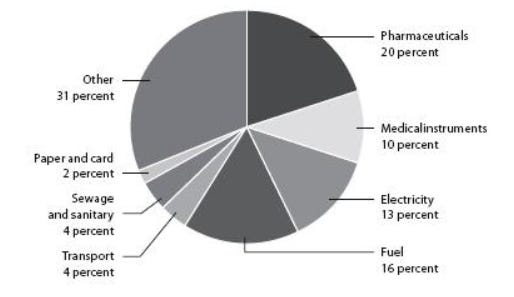
The “fixed costs” of welfare, education and healthcare would account for half of global emissions if every citizen reached “first world” standards. Eating only grasshoppers and locking everyone indoors isn't an option, I think.
We need technology. For example, with solar/wind energy you can offset your emissions and set your mind at rest about your everyday choices. Although producing a turbine generates 30 t of CO2, over 20 years it prevents 500 (i.e. 20 or 40 years of emissions with an American/British lifestyle).
🎵 Final notes
In the future, with careful tracking of consumption and investment in renewables, every citizen will collect ecological credits to spend on plane tickets and Florentine steaks with a clear conscience.
In the next 🎼ff we'll talk about optimism! 👋 See you soon, from micmer
Want to support this project? → Share it with a friend on WhatsApp → Buy me a coffee 😏 → Remember to leave a little heart below.
☕❤️