Futuro Fortissimo Archive
🎼 ff.36 Is the singularity near?
(Digital) superintelligence, and are humans already cyborgs?
Published · Michele Merelli
- Will Artificial Intelligence replace us?
- How will we integrate our minds with it?
- Are we already cyborgs, phone always in hand?
Themes🤖 AI, agents and models🏛 Geopolitics, economy and society📱 Attention, screens and habits
🐒 ff.36.1 Examples of superintelligence?
Substack ↗Between DALL-E, algorithmic recommendations, Alexa, Roomba and Neuralink, Artificial Intelligence is ever more advanced and pervasive. And so concern grows about the effects these technologies could have on society, the economy, human psychology and, above all, our futuro fortissimo.
Reading thoughts. Neuralink, one of Musk's many labours, uses electrodes implanted in a monkey's brain to get it to play Pong.
🦉 ff.36.2 The super-tome on the singularity
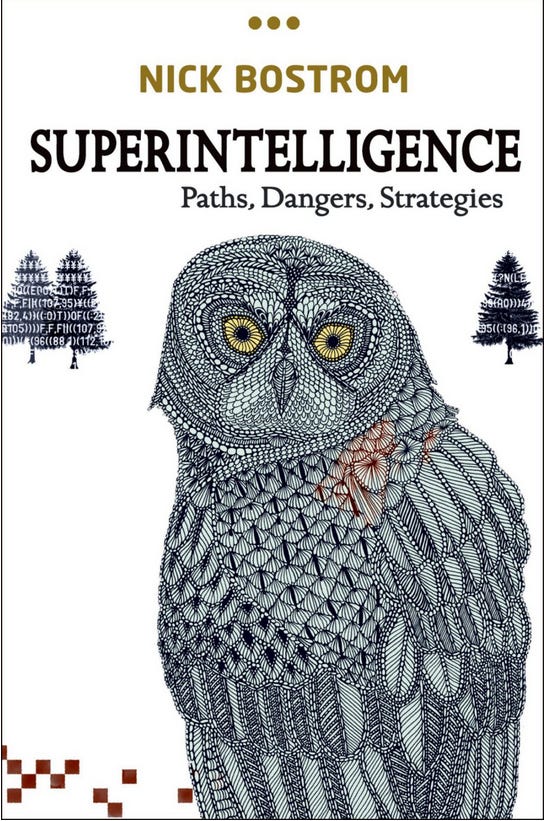
Substack ↗A book I'd start from to discuss the topic is Superintelligence by Nick Bostrom.
Swedish, a philosophy professor at Oxford and co-founder of the Future of Humanity Institute, Bostrom deals with the singularity, i.e. the arrival of an artificial intelligence superior to human intelligence and beyond human control.
The author first asks how we'll get there: by simulating the brain, or by simulating the evolution of neural networks (from the very first neuron to the assembly we find in our heads). Or superintelligence could emerge from networks of individuals and companies (is Apple conscious?) or from genetic modifications of our brains (the least likely hypothesis).
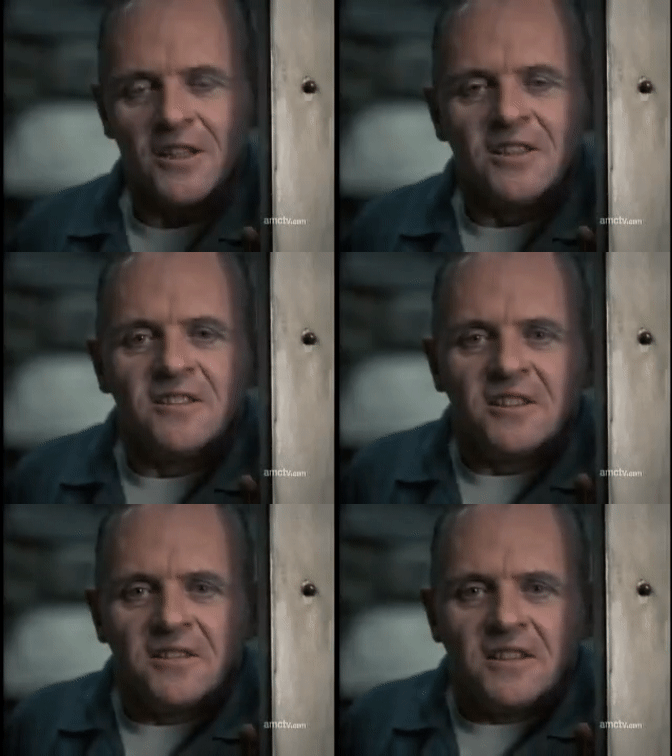
Will we be the lambs? Then he discusses AI containment strategies (disconnecting it from the internet, for example, or severely limiting its resources/computing speed). Containing a superintelligence could be harder than expected (like Hopkins in The Silence of the Lambs). After all, if it's a superintelligence, by definition it would have escape strategies and powers of persuasion beyond our imagination.
Finally, Bostrom asks which universal and moral values to instil in it. What final goal should we give it? And how do we stop it from interpreting it in some absurd way, turning us into paperclips?
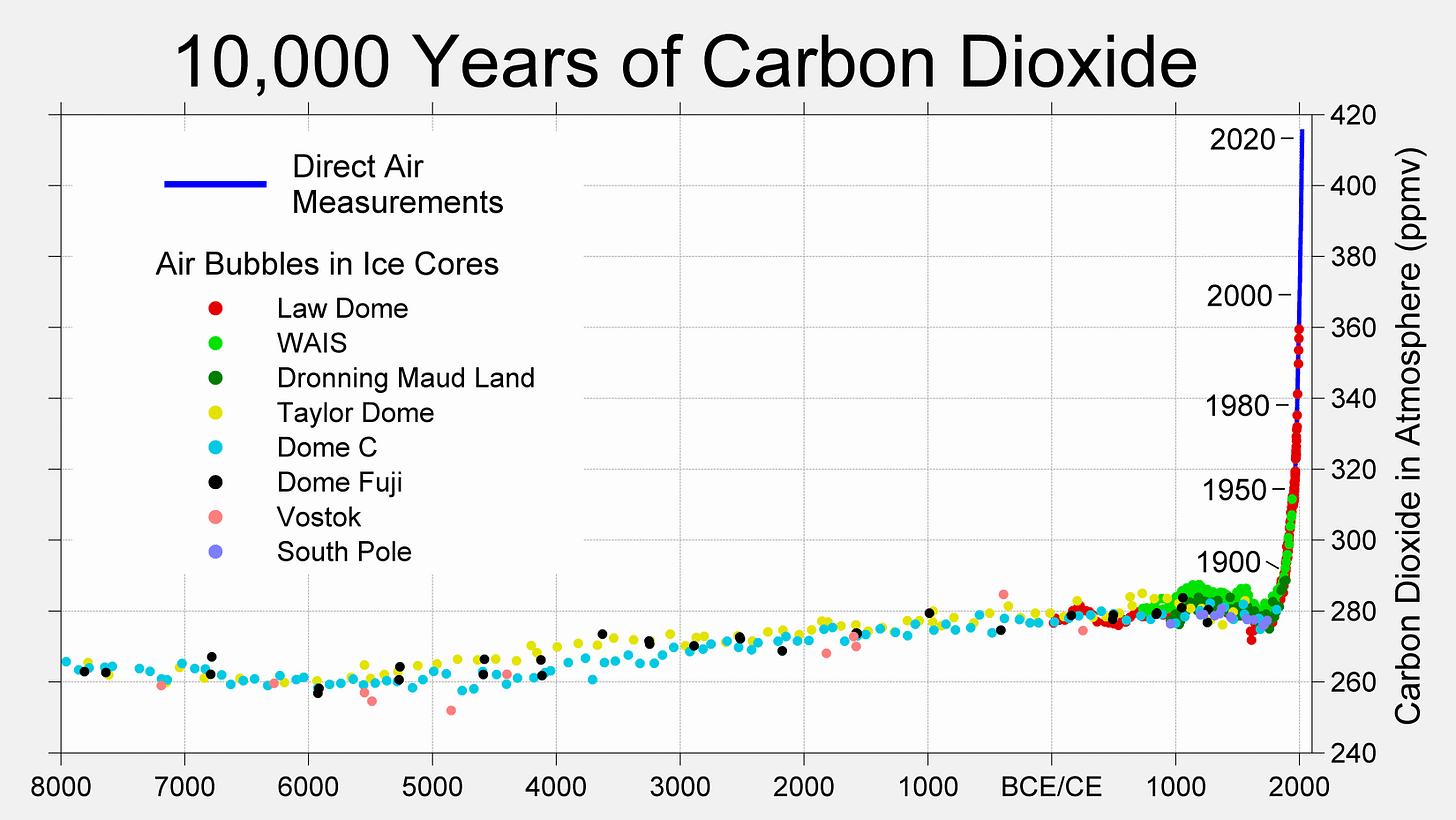
The singularity is already here:
Alcune centinaia di migliaia di annifa, nella preistoria umana (o ominide), la crescita era così lenta che ci voleva circa un milione di anni perché la capacità produttiva umana aumentasse sufficientemente per sostenere un ulteriore milione di individui. Nel 5000 aC, in seguito alla Rivoluzione agricola, il tasso di crescita era aumentato al punto che la stessa quantità di crescita richiedeva solo due secoli. Oggi, dopo la rivoluzione industriale, l'economia mondiale cresce in media di quella cifra ogni novanta minuti. Nick Bolstrom
The singularity in CO2:
🗣️ ff.36.3 A good chat
Substack ↗Lex Fridman always has interesting guests. Keeping up with him is very hard: he does a couple of podcasts a week, 2-3 hours each.
In this episode he talks with Ray Kurzweil, futurist and inventor of various speech recognition technologies. His next book, The Singularity is Nearer, updates his predictions on artificial intelligence.
Forget the Maya, mark 2029 in your diary. That's the date for reaching the singularity, defined as the moment when a human can't tell answers given by AI from those of a Sapiens (passing the Turing test). I also recommend the film Ex Machina on this topic.

🤖 ff.36.4 Are we already blended with AI?
Substack ↗Next time you're at your desk working, put your phone in the desk drawer. Within 5-15 minutes your hand will instinctively jerk towards it. But it won't be in its usual place. For a moment you'll feel mutilated. At least, that's what happened to me.
C17 or C18? By now, it's undeniable, the phone is an extension of ourselves. It gives us access to news, the music of the moment, city navigation, stock quotes, entire encyclopaedias. We're augmented. We're Super Sapiens. We're cyborgs.
Even without electrodes implanted in the brain, this connection is changing our physiology. For just over 10 years our brains have had to handle brand-new (and very high) levels of cortisol, dopamine, serotonin (etc…).
Smartphones and social media keep triggering:
The anxiety of knowing the latest news; The desire for approval; The search for social validation
In The Atlantic, Jean M. Twenge, a psychology professor at San Diego State University, argues that smartphones have destroyed a generation, iGen.
The scientific paper and its observations:
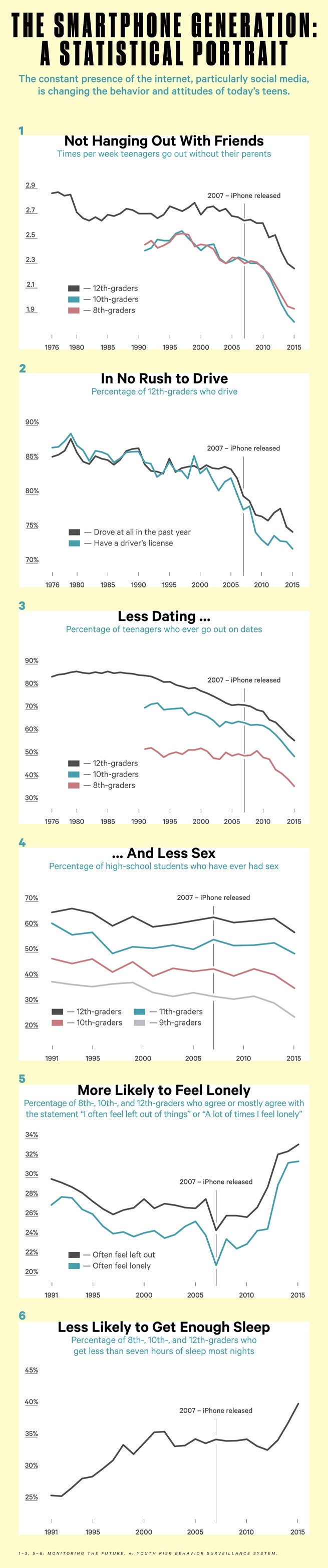
Teenagers who spend more than three hours on their phones show a 35% higher risk of suicide. More harm to themselves than to others, in social media isolation. In 2011 (for the first time in 24 years) the suicide rate was higher than the homicide rate among teenagers. A problem for girls. Depression symptoms rose by 21% for boys, while for girls we're at a 50% increase between 2012 and 2015.
Below, some correlations (not proven causal links) between the iPhone's release date and social phenomena of interest (image from Have Smartphones Destroyed a Generation?).
In short, we need LookUp more and more: the startup created by a dear friend that rewards us when we look up from our phones.
Extra reading (Nature paper): The effects of smartphones on eyesight, neural activity and our comprehension skills.
👋 And that's all for this fortissimo week! 🔜 In the next ff we'll talk about robotics (Tesla and NVIDIA)! See you soon, Michele
Want to support this project? Subscribe to the newsletter and share it with a friend on WhatsApp
👇🔥Subscribe
Or buy me a coffee 😏
☕
And remember to leave a little heart below.
❤️