
Futuro Fortissimo Archive
🎼 ff.56 The Earth's air conditioner
Geoengineering, non-chemical trails and other bogeymen to get past
Published · Michele Merelli
- Ozone, farming and industrialisation: are we already geoengineers?
- Why controlling the weather might be a smart choice
- Wars fought with droughts and floods?
🦣 ff.56.1 The last 22k years of the Earth's thermometer
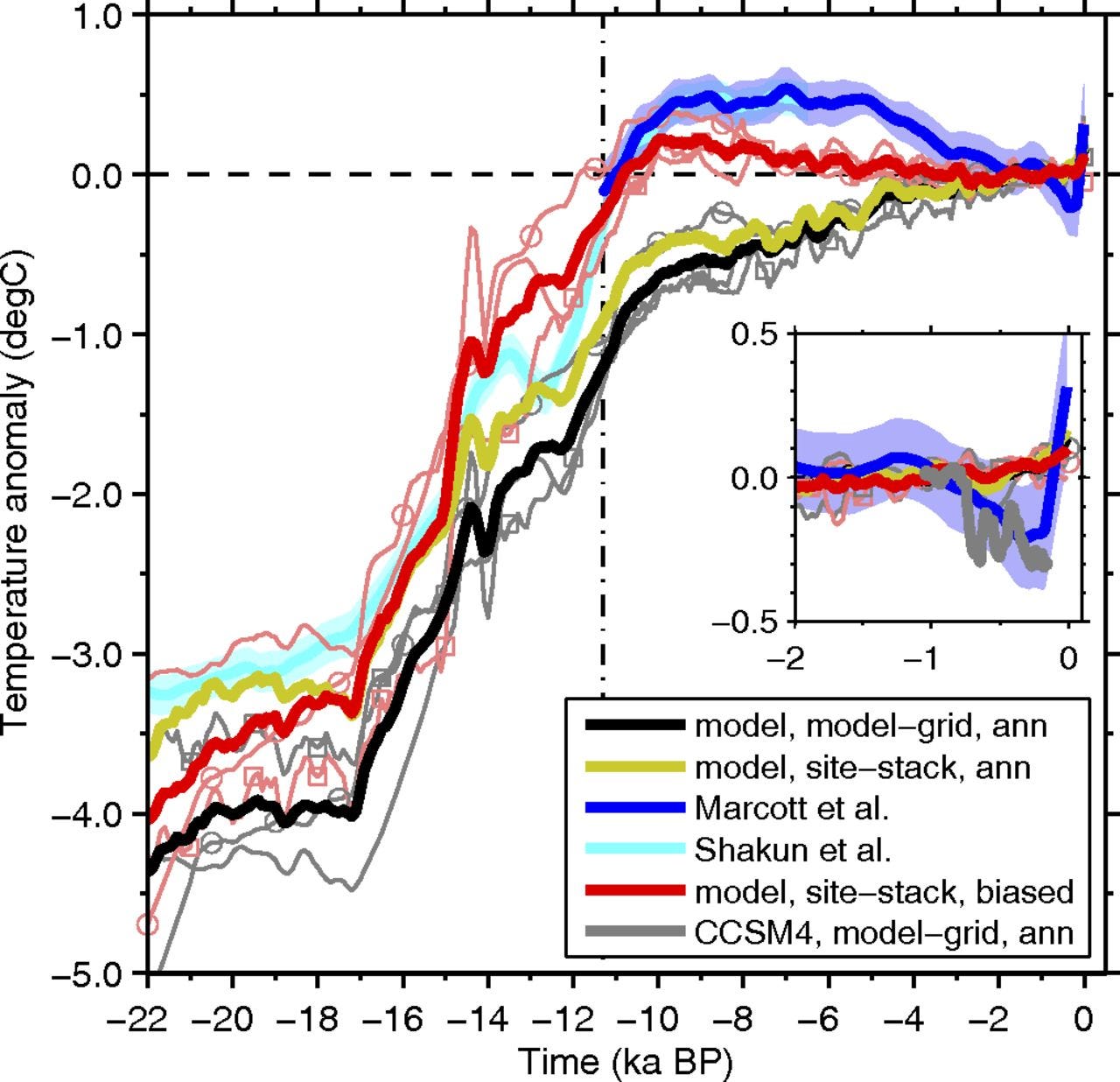
Substack ↗When in doubt, zoom out. Let's start with history. With prehistory, actually. It's always good to put concepts and trends in perspective. Take the warming of our planet. Here are recent estimates for the last 22 thousand years. The end of the ice age brought +4°C.
ocean currents shift → CO2 rises → more plants → end of the ice age
Move over, Bolsonaro. 20k years ago there was half the vegetation there is today. Nature isn't always kind to itself. It's also worth remembering that a CO2-richer atmosphere increases photosynthesis efficiency (up to a plateau at 1000 ppm).
🕳️ ff.56.2 We are already geoengineers
Substack ↗Agriculture raised atmospheric CO2 to 280ppm. Glacial cycles predicted 240ppm for pre-industrial levels. 6000 years ago the Earth's average temperature was 1 degree higher than in the 19th century and, without agriculture, Canada would have been covered in ice.
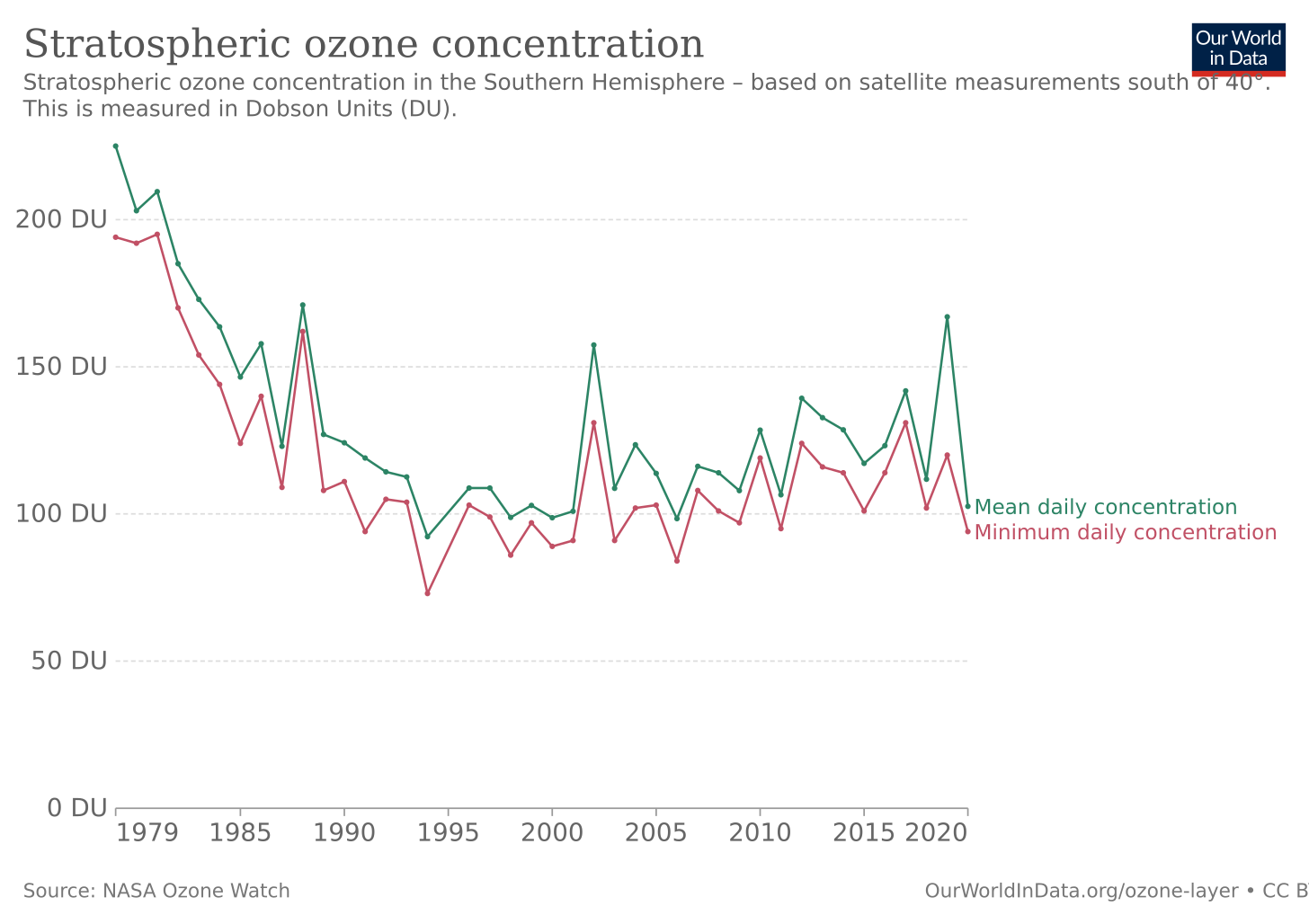
Containing the ozone hole is perhaps the textbook example of geoengineering. Its dangerous thinning was stopped by banning chlorofluorocarbons (and other ODS, Ozone Depleting Substances). NASA reminds us of the UV-blasted world we avoided thanks to the Montreal Protocol.
And smog? Our CO2 and sulphate emissions are already changing the climate (in an uncontrolled way). Very bad geoengineering, so much so that sulphites emitted in the Northern Hemisphere cause droughts in Africa.
🌊 ff.56.3 A waterfall one kilometre high
Substack ↗Given the immense (solar) energy reaching the Earth, tiny variations (like the amount of reflected light) make geoengineering easy to implement. At the same time, they make the balance precarious.
☀️ Solar radiation | 170k TW |☁️ Reflected radiation | 50k TW (30%) |🏭 World production | 15 TW (1/10k)|
How much is 170k (thousand!) TW? A waterfall one kilometre high running along the entire equator.
🌧️ ff.56.4 Controlling the rain
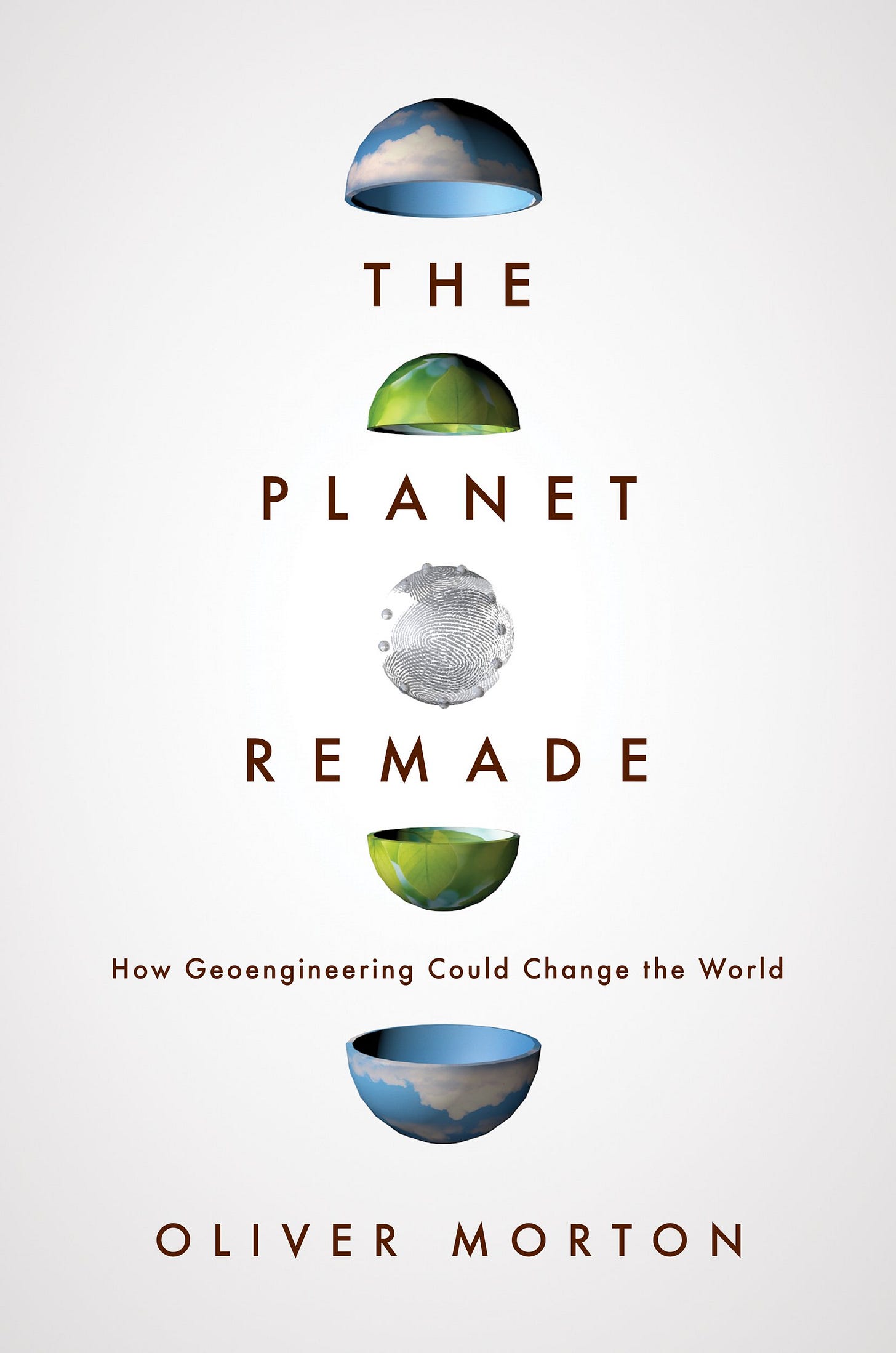
Substack ↗Oliver Morton, a senior editor at The Economist (no small fry), published The Planet Remade, an excellent book on the subject.
Plenty of food for thought to get past the Promethean/catastrophist dichotomy and think rationally about controlling the climate. Geoengineering is neither a magic fix nor “unnatural”, but one more tool to consider with care, responsibility and humility.
Ballare può servire se ci crediSarà il più primitivo dei rimediLa danza della pioggia degli indianiDanze tribali come gli africaniJovanotti,Dobbiamo inventare qualcosa
In Wyoming, between 2008 and 2016, they tried to make rain. The result? Roughly a 10% increase in precipitation. The boldest will scream “chemtrails”, but after yet another summer of drought in the bed of the Po, maybe they'll accept this extreme option.
Other possible solutions mentioned:
Controlling reflected radiation (a Nature article by Harvard scientists proposing sulphate aerosols); Fertilising the oceans with iron and urea to boost plankton (more controllable, but more expensive, 12 experiments already tried); Capturing CO2 from the atmosphere (Climeworks) or, better still, from ocean water.
Armand Domalewski@ArmandDomaThis is extremely coolnewatlas. com/environment/mi…5:25 PM ∙ Feb 18, 2023490Likes52Retweets
💸 ff.56.5 Way beyond Venice's MOSE
Substack ↗Sure, but what about the costs? Direct air capture of CO2 is, for now, very complex and not very effective.
6.6 GJ (or 1.83 MWh) | energy/ton of CO2$300-1,000/ton | $/ton (2030 estimates)$137/ton | highest emissions tax (2022)
So why not use methods like sulphate aerosols, already available and cheap?
The cost of climate engineering (the whole planet, for a decade) could be lower than the 6 billion dollars the Italian government is spending to protect Venice from rising sea levels. David Keith, A case for climate engineering
🎵 Final notes
In the future, Switzerland will boost its ski season by locally increasing precipitation. Meanwhile the Dolomiti Superski area will see yet another season without snow.
In the next 🎼ff we'll talk about marathons (and why they're good for you)! 👋 See you soon, from micmer
Want to support this project? → Share it with a friend on WhatsApp → Buy me a coffee 😏 → Remember to leave a little heart below.
☕❤️