Futuro Fortissimo Archive
🎼 ff.127 Jazz with ChatGPT
Why must the humanities and science start talking again?
Published · Michele Merelli
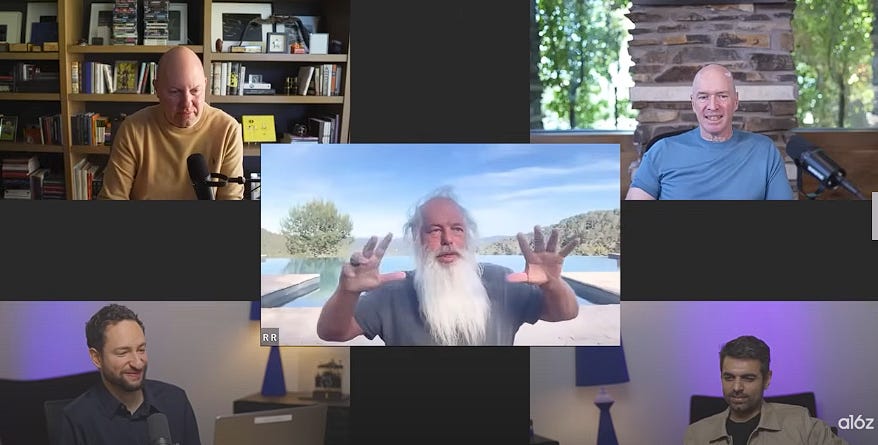
- Rick Rubin: from Adele to Anthropic
- So what is vibe coding?
- Leopardi rewrites the Schrödinger equation
🛣️ ff.127.1 The third wAI?
Substack ↗Ever since secondary school, I've been fascinated by the intersection of the humanities and scientific knowledge. I think you've noticed from futuro fortissimo too (🖼️ ff.18.3 Art, between artificial intelligence and humans, 📜 ff.101.4 Poetic Web).
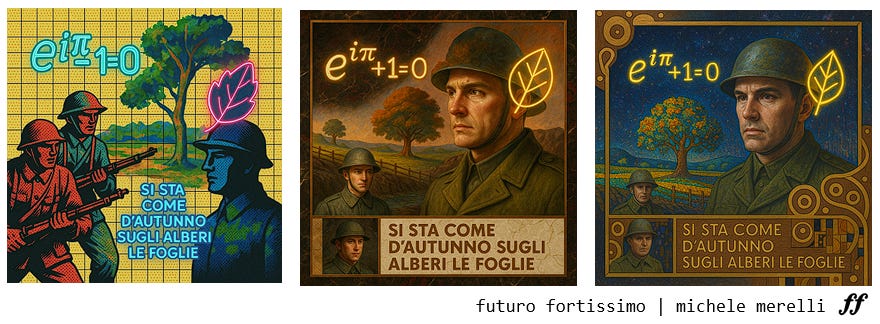
Concision. That was my thesis as a fresh-faced school-leaver: the ability to condense concepts into a few signs, from Ungaretti's Soldati to Euler's equation.
Concision as the meeting point between the humanities and science.
The two cultures, so sharply distinguished in Snow's essay of the same name (1959), are drifting ever further apart, partly because of growing specialisation.
[…] I have asked the company how many of them could describe the Second Law of Thermodynamics. The response was cold: it was also negative. Yet I was asking something which is about the scientific equivalent of: Have you read a work of Shakespeare's? C. P. Snow, The Two Cultures
Can Artificial Intelligence tear down this “Berlin Wall”?
🤘 ff.127.2 Rock ‘n’ roll and vibe coding
Substack ↗According to the legendary Rick Rubin (🎤 ff.101.1 Adele's manager), yes.
Enter vibe coding. To prove it, Rick worked with Anthropic to create The Way of Code, an interactive software-book that “remixes” messages from the 3,000-year-old Tao (☯️ ff.108.3 Be water) with contemporary concepts.
Rick compares ChatGPT to the jazz revolution: it lets you remix elements, not just sounds but culture (🐆 ff.127.3 Leopardi and the Schrödinger equation).
But, but, but. AI mustn't be a simple copy-and-paste: the first answer, given the statistical nature of LLMs, is “common”, banal, not very creative.
Rick explains how he uses AI: iteratively, with questions and comments, aligning the answers more and more with his artistic taste. The same method he used in his early work with Johnny Cash.
🐆 ff.127.3 Leopardi and the Schrödinger equation
Substack ↗Why now? Two years ago, generative art gave poor results (🌳 ff.35.5 Leopardi's L'infinito according to AI). Today it's a whole different tune (remixed).
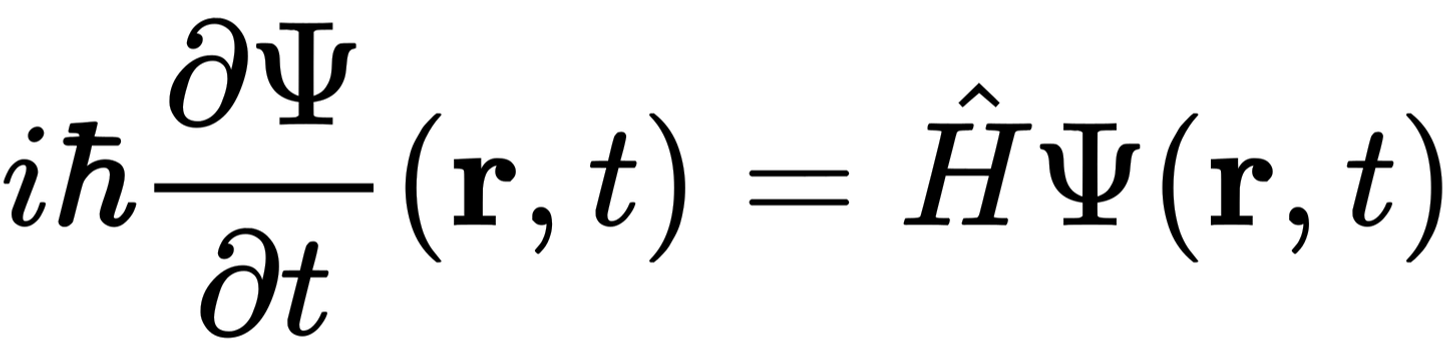
Here's a poem on the Schrödinger Equation in the style of Leopardi:
Wave that dwells unknown — ψ, faint sigh of being, in spaces where the void speaks with Hilbert's voice —, listen: for the algebra of the cosmos within your womb of shadow resounds. There, among silences where the great emptiness embroiders the weft of time, the sign ∂/∂t caresses you and, with Planck's constant — ħ, light stellar rag —, steals you away. The square of your modulus — mystic density of probable truth — becomes fleeting homeland of every particle, which never owns a room or border, but wanders, hopes, decays. Thus the Laplacian operator, arcane chisel of the infinite, carves you upon a field of potential, V(x), while mass, a timid handmaid, at every point refracts the balance between impulse and fate. Eternal then the equation hovers, stern: iħ ∂ψ/∂t = [−ħ²∇²/2m + V]ψ, shore of uncertainty where the real oscillates and falls silent, as if it hoped, with the poetry of a hidden electron, to glimpse an end to blind becoming. Oh sweet illusion! That still torments me to set a measure to the motion of the heart, when even the moon in the deep sky knows not itself, and we, larvae of atoms, in a single line of Schrödinger, wander. micmer x o3 x Leopardi, Onde (Waves)
“the Laplacian operator, arcane chisel of the infinite” “we, larvae of atoms” “ħ, light stellar rag”
If that isn't poetic…
🚁 ff.127.4 And what does Palantir have to do with it?
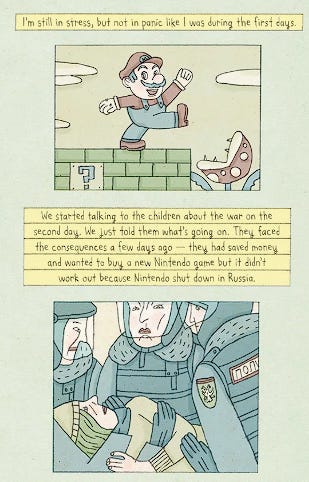
Substack ↗The humanities are also a cure for the winds of war.
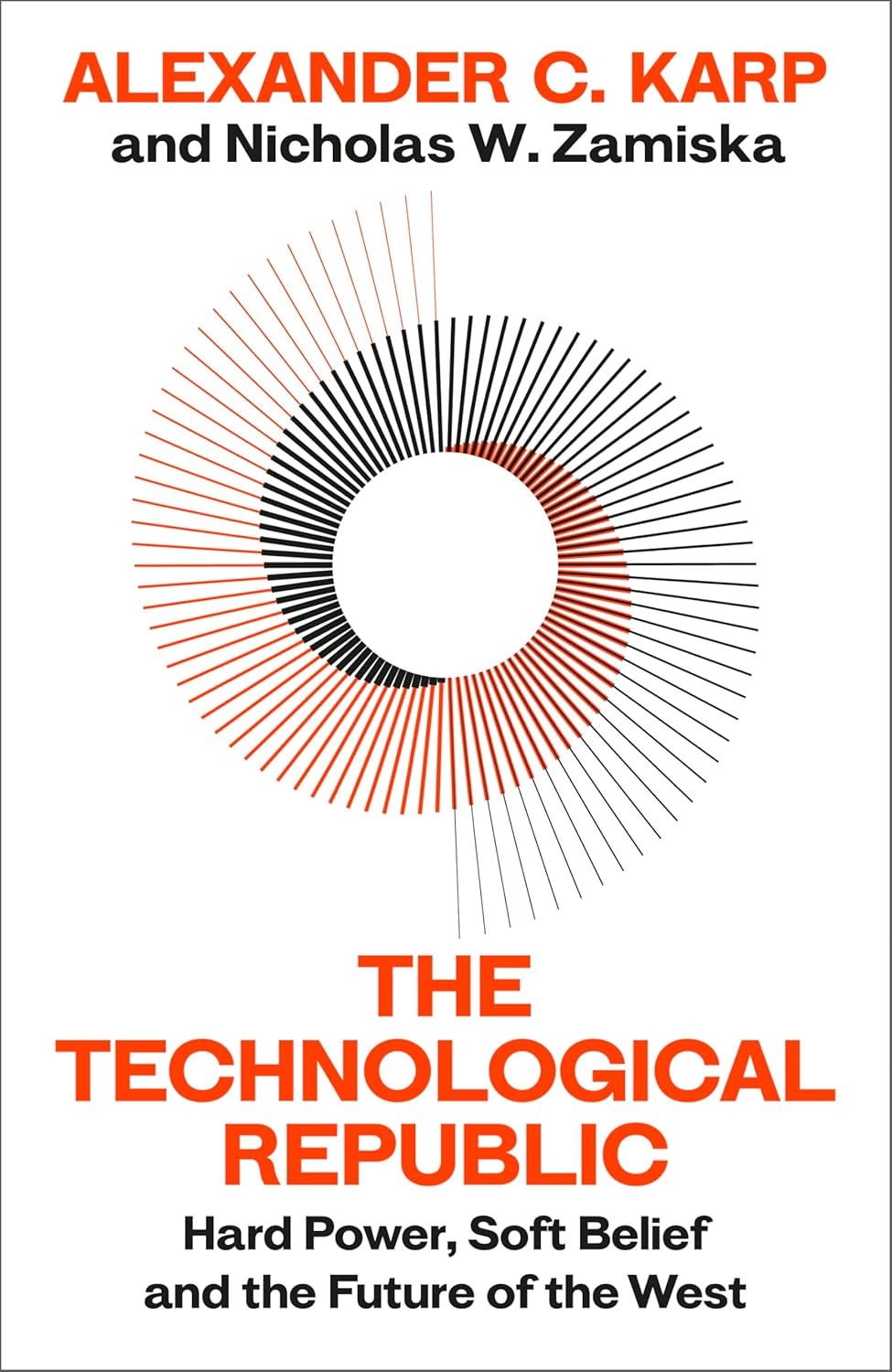
In his recent book, Palantir co-founder Alex Karp denounces a Silicon Valley with no sense of nation or military.
Silicon Valley engineers refuse to work with the US military, but don't hesitate to raise money to build the next alienating social network. The number of humanities graduates has gone from 14 to 7% (179k) between 1966 and today, while enrolment in computer engineering reached 90k in 2020. We need engineers who are curious about the world, its history, its contradictions; not just able to code. Alex Karp, The Technological Republic
In the past, I've argued that 🎼 ff.14 War is not the future. Yet Mariana Mazzucato reminds us in her book, The Entrepreneurial State, that the internet and GPS came out of the US Department of Defense. Then came Instagram and Uber.
In short, if AI lets Rick Rubin become a programmer, Silicon Valley in turn has to rediscover art, history and philosophy.
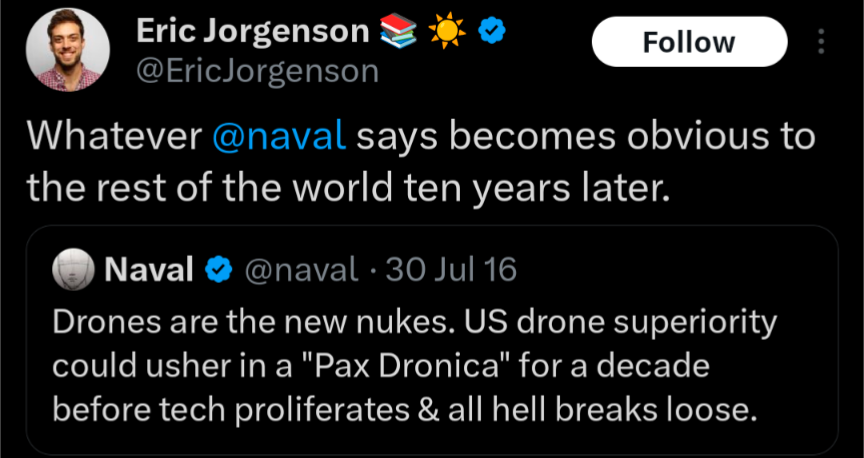
For a third way that's pacifist, but aware of the risks that software, the new “nuclear”, poses to the future of humanity.
🎶 fortissimo notes archive
👋 See you soon, from micmer
© futuro fortissimo | michele merelli