Futuro Fortissimo Archive
🎼 ff.146 Silent scars
Against AI's endless permutations: scars and poetry?
Published · Michele Merelli
- Urinal culture: if Duchamp were alive today, would he use ChatGPT?
- From Calvino to Heidegger: automatic writing or poetry?
- To write, must you “feel”, that is, “suffer”?
🚽 ff.146.1 Urinals and AI
Substack ↗I won't hide it: I started writing this newsletter to collect news and ideas, to raise awareness of the futuro fortissimo that awaits us.
Today, though, all it takes is any old prompt (a podcast, an article, a book) and I can turn it into an ff.x.y-style section.
Automating the artistic process is nothing new: in The Work of Art in the Age of Mechanical Reproduction, Walter Benjamin started from an idea of Paul Valéry's; in the days of the Greeks, techniques for duplication were practically non-existent.
Then came an attack on artists:
Our fine arts were developed, their types and uses were established, in times very different from the present, by men whose power of action upon things was insignificant in comparison with ours.
But the amazing growth of our techniques [...] make it a certainty that profound changes are impending in the ancient craft of the Beautiful.
Paul Valéry, The Conquest of Ubiquity
Over the centuries, a “growth of our techniques” that undermined the Beautiful:
Printing = scribes Photography = painters Plastic = sculptors
But - Benjamin lamented - even the most perfect reproduction lacks one crucial element: its “presence in time and space”, its “Aura”.
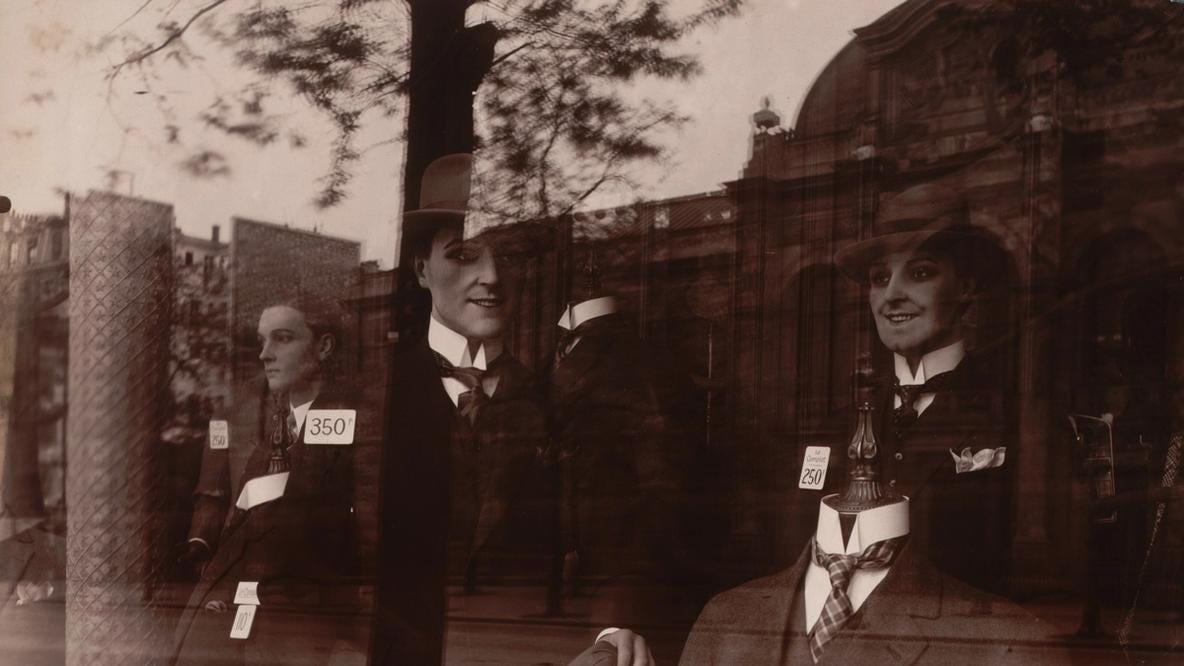
That's why Duchamp's urinal is art, but the ones you find at a motorway service station aren't: the urinal is a repeatable readymade, but the artist's first idea, the one that raises it to art, can't be repeated.
The artist thus gives it an Aura of presence in the space-time of our culture.
Bonus. When we first talked about DALL-E (😱 ff.30.3 A few less funny examples), we “touched” on urinals, of all things…

👻 ff.146.2 Ghosts and Calvino
Substack ↗So, writing this newsletter, I'm avoiding dictating out loud or generating text with GPT.
Today, writing by hand is my mental equivalent of walking to the shops or taking the stairs instead of the lift: a claim to humanity.
ChatGPT isn't the point, though. For a long time now, the machine has been able - at least in theory - to combine the 1s and 0s of information and generate the whole of human knowledge.
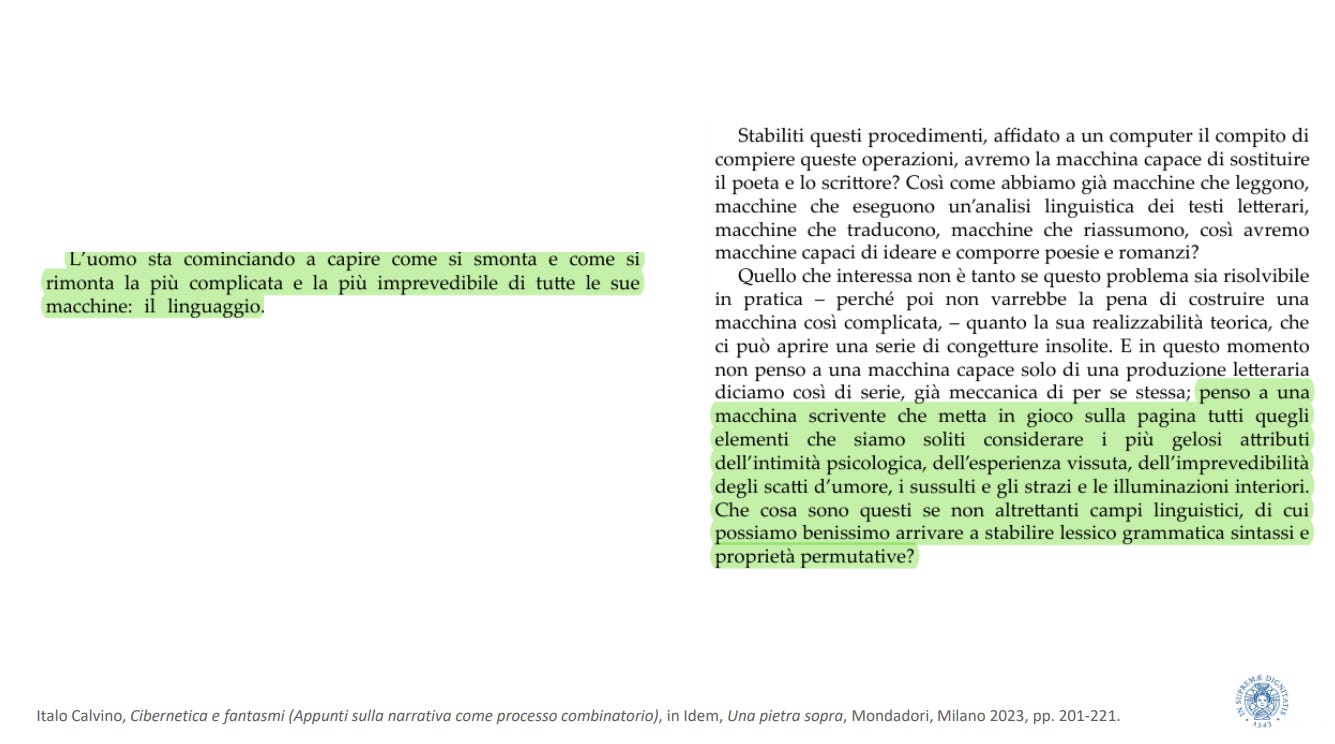
Italo Calvino, in a lecture that became famous, Cybernetics and Ghosts (1961), embraced the vision of a “discrete” kind of thought, made of signals and circuits (the 1s and 0s, precisely).
And he dreamed of a “ChatGPT”: a “poetry-and-electronics machine” able to dissect the classics endlessly, crumbling them into 1s and 0s, to extract their poetic essence.
In short, ChatGPT invented nothing: back in the '60s the experiments of Oulipo (French acronym for Ouvroir de Littérature Potentielle, “workshop of potential literature”) were already proposing endless algorithms for generating texts:
The “S + 7” (or “N + 7”) substitution method: replace every noun (S, for sostantivo) in a text with the noun that comes 7 places later in a given dictionary. So, for instance, the Italian proverb “L'abito non fa il monaco” (the habit doesn't make the monk) becomes, with a given dictionary, “L'abiura non fa il monarca” (the abjuration doesn't make the monarch). Paolo Albani, La letteratura potenziale - alcune note sparse
🤐 ff.146.3 The silence of the innocents
Substack ↗On closer inspection, Calvino himself cast man as a parrot-automaton who rephrases things “standing on the shoulders of giants”.
But is that so? An alternative path might be silence. Poetic silence.
Heidegger, after all, suggested that poetry lives in the unsaid: aposiopesis (or reticence), the human ability to break off a moment before explaining everything, leaving room for interpretation.
Interpretation - not by chance - dominates contemporary art, where artists increasingly withhold even the title of the work, leaving more room for the viewer's own poetry (in Greek, poíēsis comes from poiéō, “I make, I produce”).
Spoiler alert. I found this same suspension in one of the last scenes of Sorrentino's La Grazia, where the outgoing President of the Republic is escorted by a Boston Dynamics-style robot dog (ready to shoot, or to protect?).
💔 ff.146.4 Pathos and suffering
Substack ↗Another way to save mankind might be illness. And all the suffering - the pathos - of our bodies.
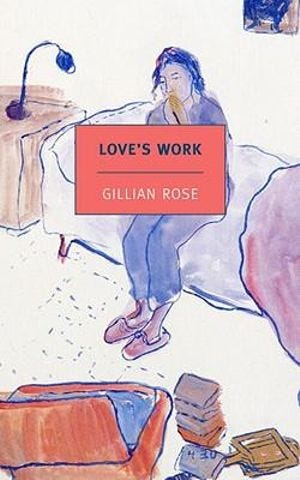
One of many examples might be Love's Work (1995), a book Gillian Rose wrote while dying of ovarian cancer.
Her suffering (in love, too) led her to write sentences like: “there is no democracy in any love relation: only mercy.”
A string of words that Oulipo (or ChatGPT) could surely generate with a few permutations.
Even so, it would lack Benjamin's “Aura”. The human pathos that leads us to com-passion, to feel with the other: the existential solidarity of philosopher Evan Selinger.
Against endless permutations, then, humans can protect themselves with scars.
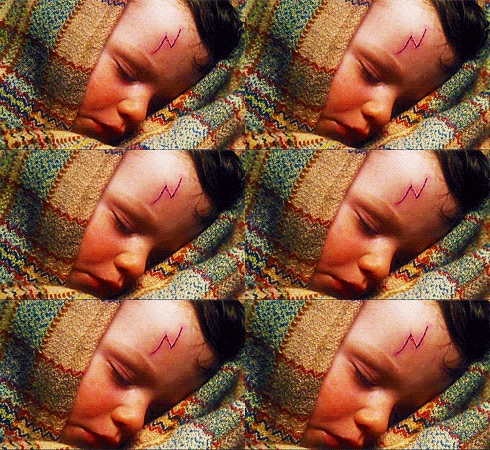
Harry (in pieces) aside, I have one from a broken collarbone (🎼 ff.124 Ah-AI!): it made my suffering during the IRONMAN in Cervia precious and one of a kind.
Another, unexpected example of 🦴ff.145.1 Man to the bone. Broken.