Futuro Fortissimo Archive
🎼 ff.32 Numbers don't lie
Phones that pollute like cars and chickens more efficient than cows
Published · Michele Merelli
- What pollutes more, a phone or a car?
- Are we no longer drinking wine?
- Are electric cars green or not?
Themes🌍 Nature, climate and energy🥗 Nutrition and microbiome🏃 Health, sport and body
⚈ ff.32.1 How much do phones pollute?
Substack ↗Let's start strong.
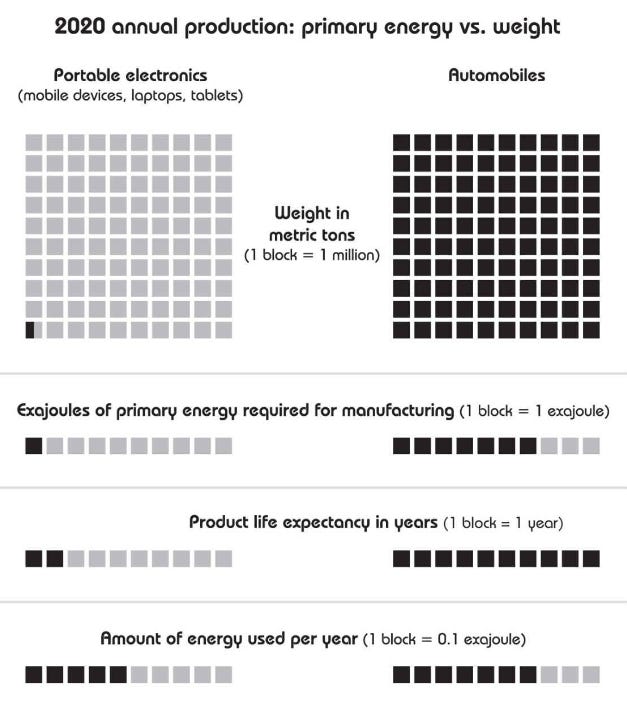
Considering all the vehicles and electronic devices produced worldwide, it turns out that every year, to make cars/laptops/smartphones, we use:
🏎️ 7 EJ | 💻 4.5 EJ | 📱 0.25 EJ
EJ = exajoule = 10^18 J. From a quick estimate (if I haven't made mistakes), every day humanity consumes (by eating, at about 3000 kcal/person) 0.1 exajoules. In a year, 36 EJ. This number doesn't account for all the waste and inefficiencies in the energy>food conversion; it's just the calories eaten.
Anyway, taking into account the longer product life (after all, we don't change our car every two years, the way we do when a new smartphone comes out with yet another extra camera), the differences in the energy used to make them shrink:
🏎️ 0.7 EJ/year | 💻 0.45 EJ/year | 📱 0.1 EJ/year
Of course, then you have to use them. And in use:
a phone uses 30 MJ (megajoules) in 2 years, 3-8% of the energy needed to make it, depending on how you charge it (with wind power or by burning coal). a car uses 500 GJ (gigajoules) in 10 years, 5x what it took to make it (100 GJ per car).
Bottom line: in a year, getting around by car you use 3000x the energy you use to power your phone.
🍷 ff.32.2 Let's drink to that (or maybe not)
Substack ↗Among the trends analysed in the book, Vaclav also dwells on wine consumption.
Our grandparents had strong stomachs (especially in France). Apparently wine consumption in France peaked in 1926, at 136 litres per capita a year. So two big, full glasses each, every day. In 2020, despite the pandemic, the French drank more or less just one glass every two days.
This trend probably reflects the growth in options and alternatives (like spirits and fizzy drinks) and doesn't tell us much about the intake of alcohol molecules in absolute terms.

🐔 ff.32.3 Chicken run
Substack ↗60% of food goes to feeding animals (in North America). Meat's climate impact is well known. Another interesting number is the one just mentioned, on the impact of feed production. But not all animals are equally efficient at converting feed into protein.
For 1kg of protein, you need:
7kg of feed for a chicken (15% efficiency); 20-30kg of feed for a cow
Not necessarily vegan. Since the global distribution of animals for meat production is currently:
🐖 40 % | 🐔 37 % | 🐄 23 %
if the percentages became:
🐖 40 % | 🐔 50 % | 🐄 10 %
we could produce 10% more meat with no greater climate impact.
💉 ff.32.4 Vaccines beat the stock market
Substack ↗Vaccines are the best investment there is. At least the pentavalent vaccine, which is good practice to give every newborn before 12 months, at a cost of about €1.
Half of Italy, almost 25 million people. That's the estimate of deaths prevented over the last 10 years thanks to vaccines. If you factor in the medical costs avoided and the economic output linked to these survivals, each vaccine is estimated to generate at least €16. Including other economic output linked to these people's survival, you can get to about €44. Against €1 spent (these days, not even a coffee).
The International Monetary Fund relaunched this message in relation to COVID-19 too.


🚗 ff.32.5 Electric cars: green or not?
Substack ↗Electric cars are green, but a lot depends on how we power them:
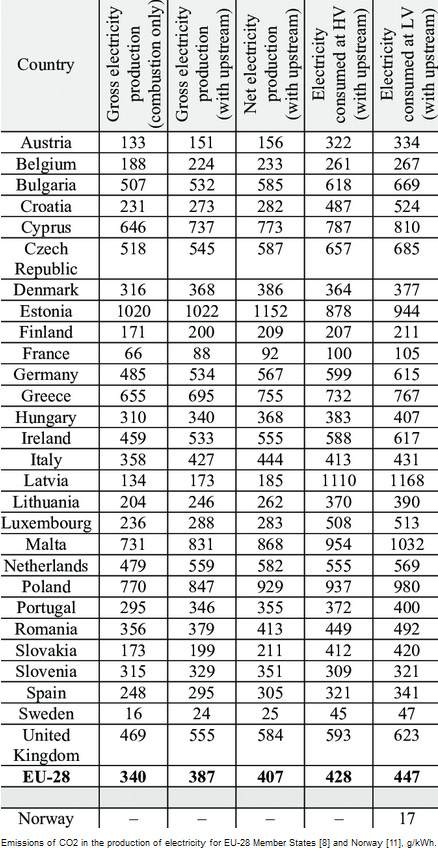
Norway, for example, produces 95% of its electricity from hydropower; France 75% from nuclear; In China, India and Poland, on the other hand, electric cars are often coal cars.
These are the emissions for the EU-28 area and Norway (Italy pollutes, for the same electricity produced, 10x what Norway does):
Toxic (not the Britney Spears song). Producing an electric car creates toxic materials equal to 3x those linked to traditional cars (due to heavy metals). Still, we can learn to manage this toxicity and, maybe, electric cars will speed up the transition to a more sustainable electricity mix.
Below, a summary table from a 2018 article that considers all the CO2 emissions linked to electric vehicles compared with conventional vehicles (CV in the chart). The number next to BEV represents the energy mix (3 is Norway).
40 times less green. As you can see, compared with electric vehicles in Norway, traditional vehicles emit 40x the CO2.
👋 And that's all for this fortissimo week! 🔜 In the next ff we'll talk about trees! See you soon, Michele
Want to support this project? Subscribe to the newsletter and share it with a friend on WhatsApp
👇🔥Subscribe
Or buy me a coffee 😏
☕
And remember to leave a little heart below.
❤️