Futuro Fortissimo Archive
🎼 ff.38 Money badly shared
All the money in the world in pizza, and growing inequality
Published · Michele Merelli
- How much pizza could we buy with all the wealth (in $) in the world?
- Why did inequality grow after COVID?
- Will our retina give us access to a fairer economy?
Themes🏛 Geopolitics, economy and society🥗 Nutrition and microbiome🪙 Crypto and metaverse
🍕 ff.38.1 Converting all the money in the world into pizza
Substack ↗We've already mentioned the crazy Tim Urban in a previous Futuro Fortissimo (🎼 ff.21 The magic of salad delivered to your door). On his blog he collects truly peculiar questions and answers.
In 2014 he started from one figure: 241 trillion dollars (the sum of the value of all the money, all the stocks, all the private and public buildings on Earth).
How do we quantify $241 * 10^12? He tried to visualise this number by turning it into blocks of gold, $100 bills or one gigantic potato.
In $100 bills: we'd have a stack almost as high as the Moon.
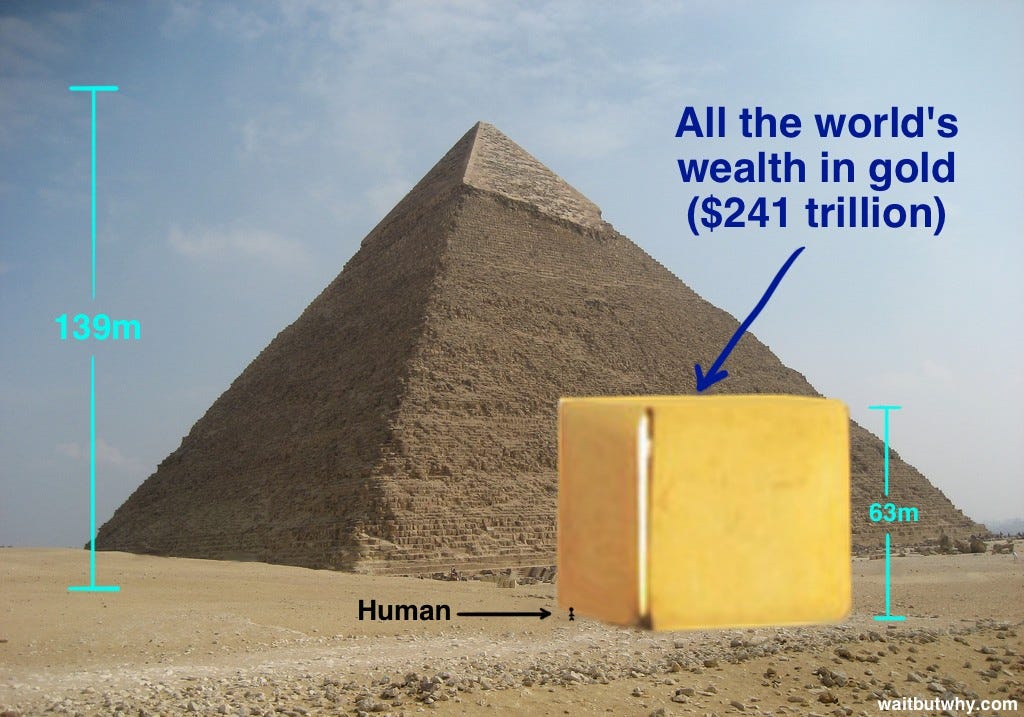
In gold: things are more manageable, with a cube 63 metres per side, compared below with a pyramid.
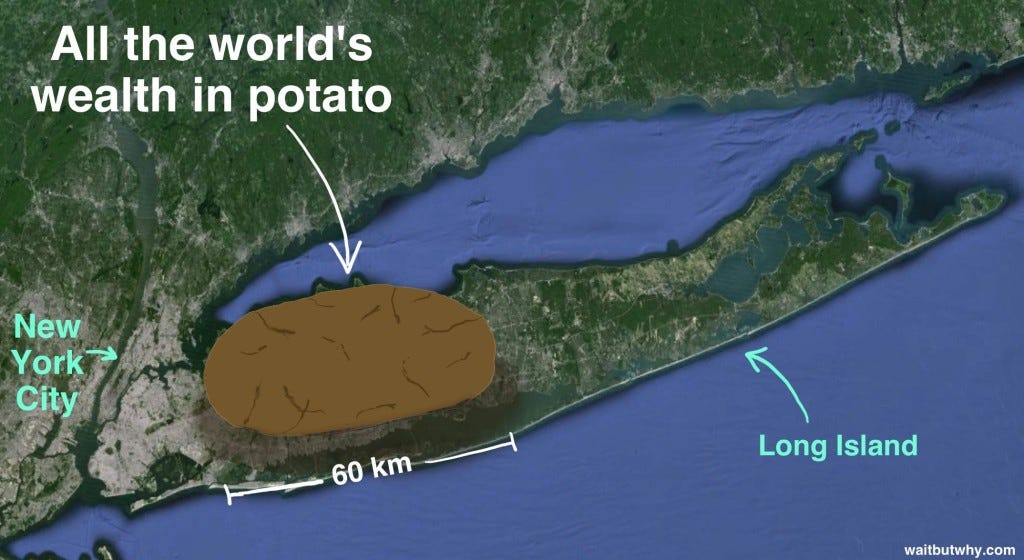
In potatoes: we get a mega tuber covering half of Long Island (179 km^3) at €0.33/kg (with inflation that number has gone up; if you're interested, here's how much a kg of potatoes costs in Italy)
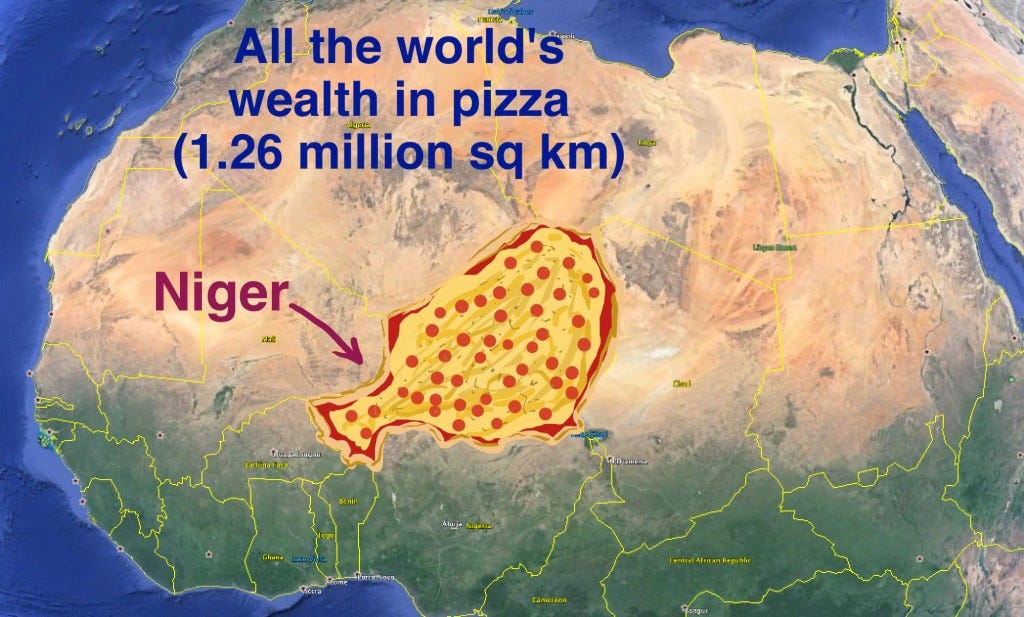
In Domino's pizza: we'd cover all of Nigeria (conversion rate used: $19 for a 14'' pizza, corresponding to 52 cm^2). Luckily Domino's pizzas that big don't exist, especially after the closure in Italy.
If you're curious about the exact calculations, I'll point you to the hilarious article.

💰 ff.38.2 COVID and inequality
Substack ↗But how is the pizza shared out? If we cut it into 9 slices and 100 people represent the entire population of the Earth:
1 takes 3 slices | 9 take another 3 slices | the remaining 90 share the last 3
A pandemic of inequality. Right after COVID, the richest 1% of the world's population accumulated more wealth than the poorest 90%. Inequality.org is a good site for more on this. The temporary “citizen's income”, i.e. the support showered on those who lost their jobs because of COVID closures, should have helped with inequality, right? Wrong.
The blanket handouts amounted to 400 billion, against 4500 billion invested in corporate assets (thus supporting the richest 1% of the population). It's true that money invested in companies then trickles down into society. But the first to receive the money are the most advantaged. Let's see why.
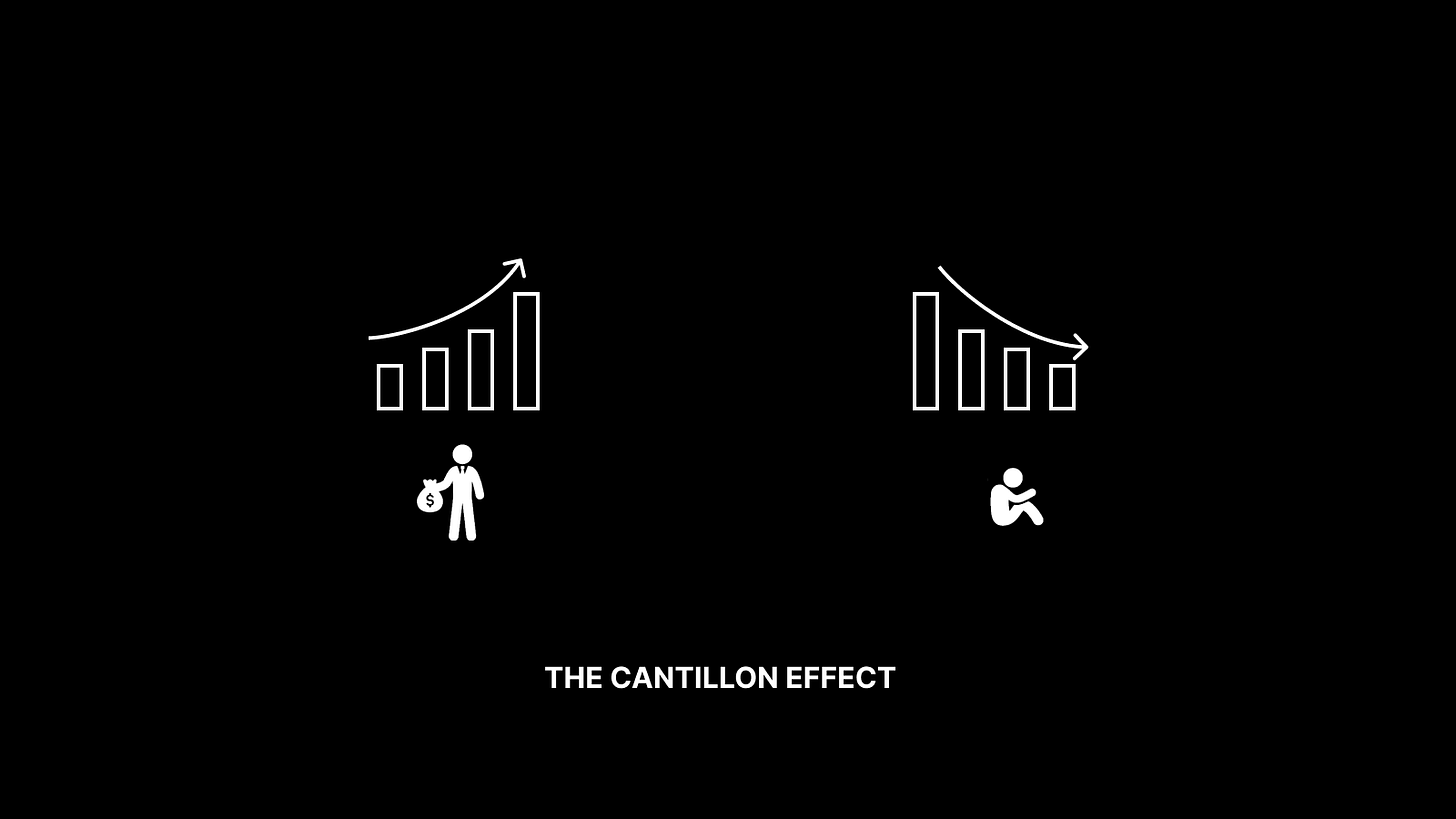
The Cantillon effect. Imagine receiving a million euros in a remote village. You spend it, build yourself a lovely house and eat delicious food, paying the other villagers, who will “feel” the money injected into the system.
Spending it first, the amount of “lovely houses and delicious food” isn't a limit. When the other villagers want their share, though, there isn't enough for everyone, because production hasn't adapted to the increased demand. “Lovely houses and delicious food” will cost more, and the wealth accumulated will be smaller. It reminds me a bit of the rising inflation going around.

👁️ ff.38.3 The cryptocurrency to reduce inequality
Substack ↗Much of the value of Meta, Google and Amazon is their network effect: Facebook makes sense because it creates and offers connections. This is intangible value, with no physical counterpart like an advanced machine or a super-powerful chip. So it isn't produced, nor does it generate a complementary physical economy around it. It's just built into the company's share value, which is owned by the (often richest) 1-10% of the population.
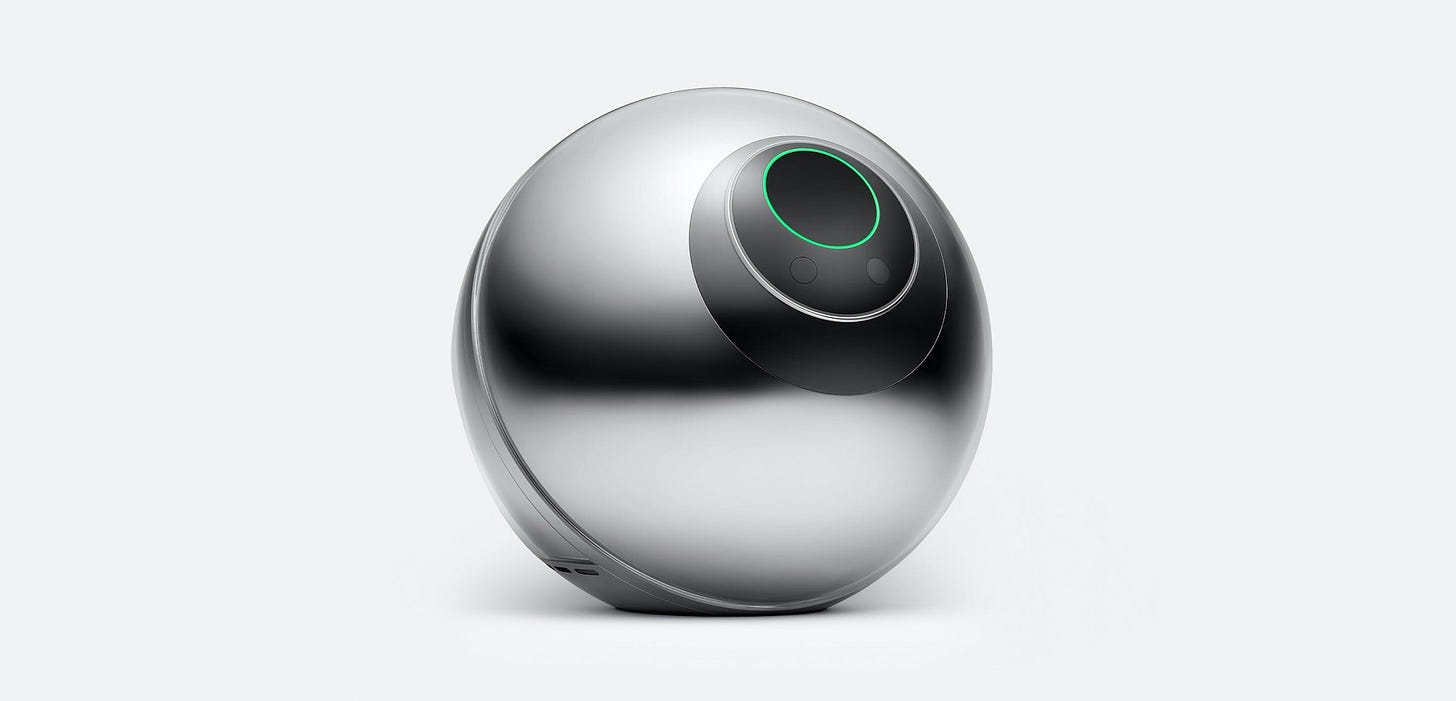
Retina as a wallet. To try to redistribute part of the wealth tied to these networks and to the internet, Worldcoin proposes bringing every citizen on Earth onto the blockchain, scanning their eye and giving them a unique economic passport and equal access to the most basic technologies.
Recently, major investment funds invested ($100M) in this technology. Worldcoin expects to scan an average of 350-1400 people a week (starting from a base of 60k users). For comparison, “crypto” users number 400M (from Crypto.com, 2021).
👋 And that's all for this fortissimo week! 🔜 In the next ff we'll talk about clothes and fashion! See you soon, Michele
Want to support this project? Subscribe to the newsletter and share it with a friend on WhatsApp
👇🔥Subscribe
Or buy me a coffee 😏
☕
And remember to leave a little heart below.
❤️