Futuro Fortissimo Archive
🎼 ff.150 Yes we can?
Can vs must, and the negativity of the Other
Published · Michele Merelli
- The next pandemic: neurons? (forget COVID)
- From must to can: Yes We Can (a bit too much)
- What are Unselfing and We-tiredness?
Themes🏃 Health, sport and body🏛 Geopolitics, economy and society🎨 Culture, books and art
🐺 ff.150.1 Wolves, viruses and neurons
Substack ↗Mental health and burnout concern our future. So 🎼 ff also returns to ❤️ Humans (as well as 🍃 Nature and 🖥️ Technology). Some time ago we saw 🎼 ff.62 How to avoid burnout, with Paul Millard, who left McKinsey to move to Taiwan. It's no coincidence that Byung-Chul Han, a major contemporary thinker we already met in 🍎 ff.64.2 From Newton to Einstein, also wrote The Burnout Society: The 20th century was immunological: borders, walls, the Stranger/Other seen as a threat. Then the Other became ever more insidious: from wolf to rat, from insect to virus. In the 21st century, the Other has disappeared. And the greatest danger has become internal: our own neurons. Bonus. In biology, autoimmune diseases are on the rise.
🛋️ ff.150.2 Freud in the bin?
Substack ↗Depression and burnout, then, are not external infections (the negativity of the Other), but internal explosions, of a potential-self that multiplies endlessly. Like a tumour. We're a long way, then, from Freud's Superego, which reins in the drives of the Id in a moralistic, religious society: the Du sollst (Should, You must) has been replaced by the Du kannst (Can, You can).

♾️ ff.150.3 Infinite possibilities (and life)?
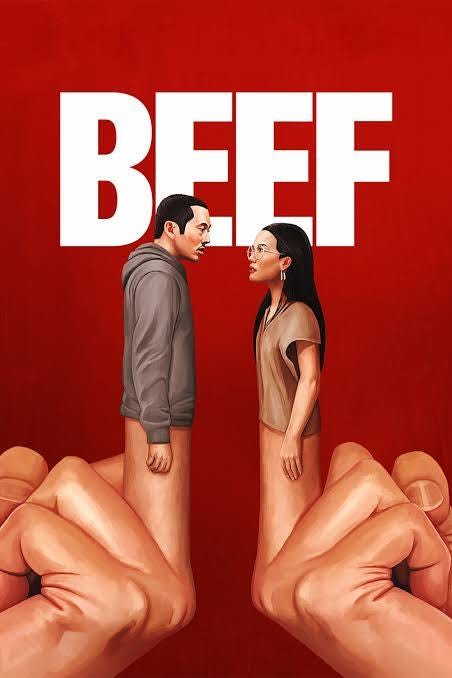
Substack ↗Han goes on, reflecting on the infinity of the Ego: If society and the social fabric are disappearing (the Other), the Ego is left with its own body, to be kept healthy at all costs. The capitalist economy absolutises survival. It rests on the illusion that more capital produces more life, understood as a greater capacity to live. Bryan Johnson's DON'T DIE comes to mind... Han calls our society the Leistungsgesellschaft, the achievement society. A source of perpetual (distr)action, so much so that we can't even get properly angry any more. Anger has been replaced by annoyance: The general distraction afflicting contemporary society doesn't allow the energy and intensity of anger to emerge. Today, it increasingly gives way to offence or annoyance, to “having a beef”, feelings that prove incapable of producing decisive change. Yes, we're annoyed by everything. Even by a small misunderstanding pulling out of a car park. Speaking of which: the second season of Beef is out (a self-explanatory title).
- ff.150.4 Do I think negative?
Substack ↗Mea culpa. I won't hide that Futuro Fortissimo is first and foremost positivism ( 🎼 ff.59 Optimism takes flight! ). And yet the negativity of the Other (the horn blaring in the queue at Paullo) seems to be the only cure for hyperactivity. Without this external limit, we sink into Peter Handke's I-tiredness: a mute, solitary fatigue, chasing yet another marathon PR, the latest better-paid job offer, yet another IRONMAN. Either one, or the other. Faced with modern infinity, at some point you have to cut, de-cide, cut away ( 🏠 ff.44.3 Settling down steadies you ). It's hard, I know. And Kierkegaard knew it in 1843, with his book Either/Or.
🌱 ff.150.5 Love yourself (and get bored) a little
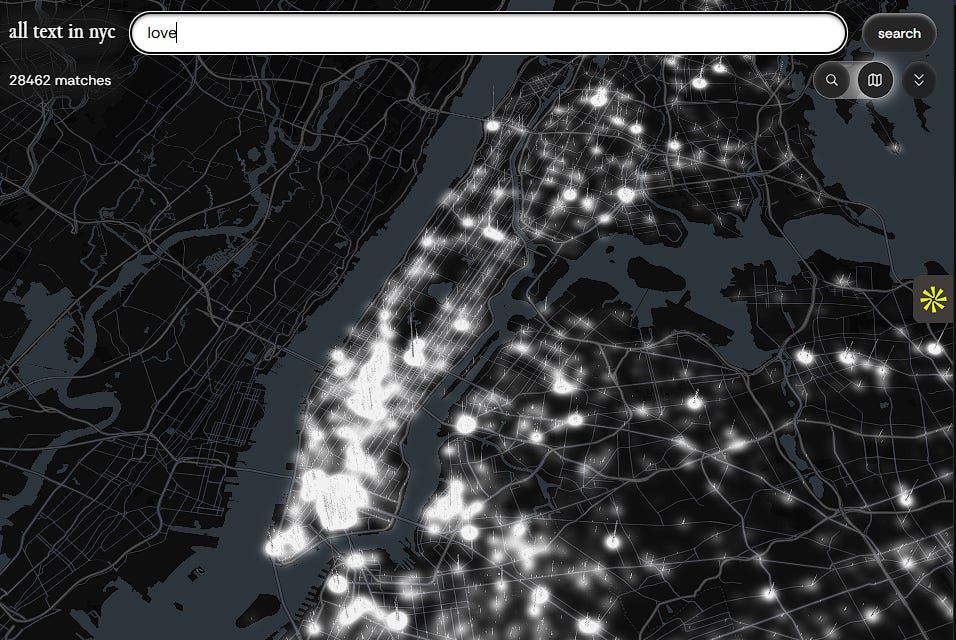
Substack ↗But the Other isn't necessarily an angry trucker leaning on the horn. The Other is above all love: Love is the extremely difficult realisation that something other than oneself is real. Iris Murdoch, Existentialists and Mystics The Chilean biologist Humberto Maturana reaches the same point by way of evolution: Without love, without acceptance of others living beside us, there is no social process and, therefore, no humanity. Humberto R. Maturana, The Tree of Knowledge Iris Murdoch and Peter Handke come back together, then. We need less Self, Unselfing as the former suggests, to get bored - yes - but together: We-tiredness, as proposed by the latter.