Futuro Fortissimo Archive
🎼 ff.53 The cure for cancer?
Mortality rates, personalised therapies and a light at the end of the tunnel
Published · Michele Merelli
- Is mortality falling worldwide?
- What does the Tour de France have to do with it?
- How much would life expectancy rise if we beat it?
Themes🏃 Health, sport and body
🤞 ff.53.1 Fewer cancer deaths
Substack ↗Cancer is a tough subject. All of us are touched by it, more or less directly. Sadly, I know this well. It can lead to utter despair, or to a psychological rebirth, perhaps rediscovering the importance of family, as in the story of this new dad diagnosed with a terminal illness.
La società ci presenta il sogno che i nostri amici possano essere la nostra famiglia. Questo è il presupposto diFriends,SeinfeldeHow I Met Your Mother. Possiamo lasciare alle spalle la nostra città natale e avere emozionanti avventure nella grande città con persone che incontriamo. E queste persone ci ameranno, ci cureranno e saranno sempre presenti per noi. Ma la vita è più simile a ciò che è accaduto agli attori diFriendsnella realtà. La loro reunion televisiva è stata la prima volta che tutti e sei si sono riuniti dopo anni. Si volevano ancora bene in un certo senso, ma si erano allontanati l'uno dall'altro
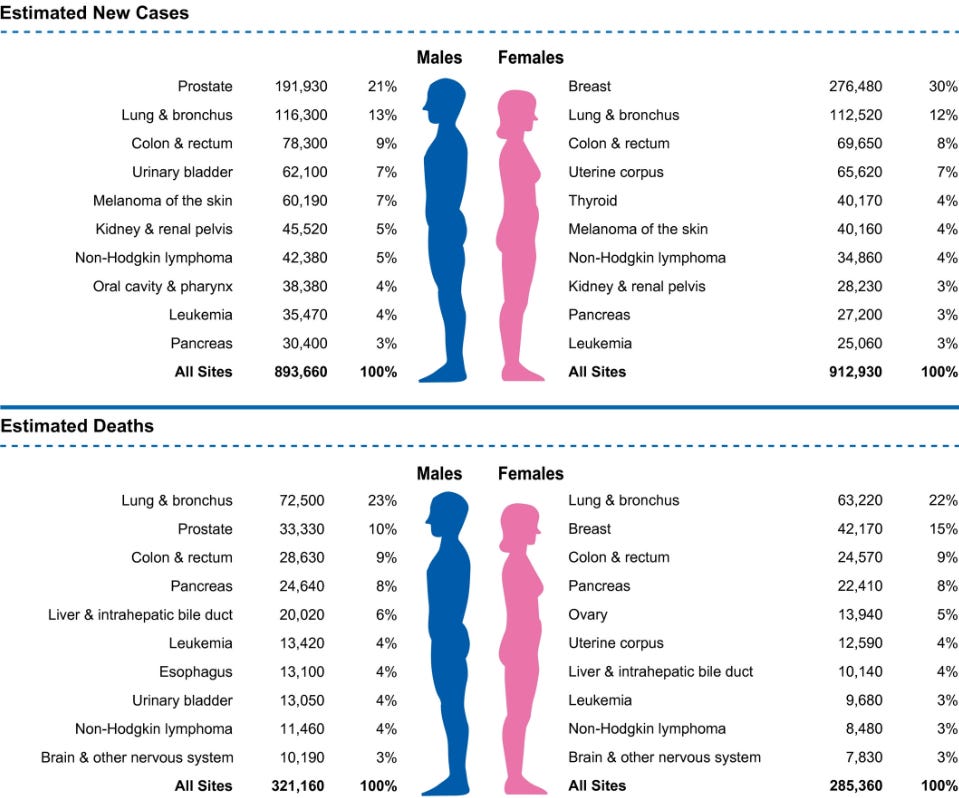
First, let's try to quantify the problem. Here are some statistics on how widespread cancers are:
1/8: women diagnosed with breast cancer
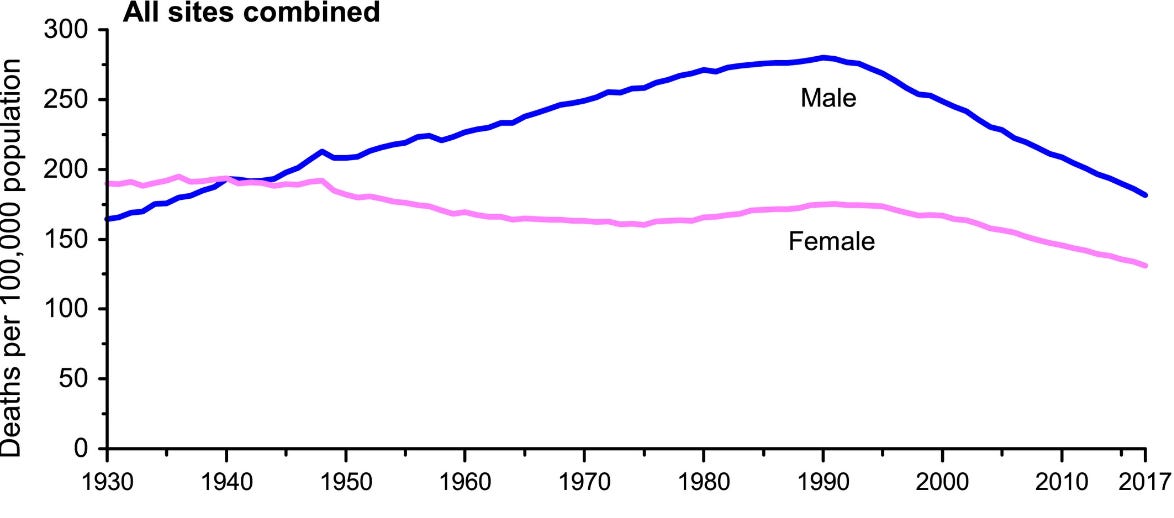
The same article shows the drop in cancer deaths that began in the '90s (especially among men). A combination of prevention, less smoking, better healthcare/fewer infections and, as we'll see, better treatments.
Living kills you. As with many diseases, we haven't found a definitive cure. But we're getting better. One example (given how common breast cancer is among women): Trastuzumab Deruxtecan (not a Pokémon). Last year a therapy was developed for HER-negative breast cancers, previously critical.
In rich words
Among all patients, the median progression-free survival was 9. 9 months in the trastuzumab deruxtecan group and 5. 1 months in the physician’s choice group (hazard ratio for disease progression or death, 0. 50; P<0. 001), and overall survival was 23. 4 months and 16. 8 months
So let me ask you a question:
Loading...
According to BioAge Labs founder Kristen Fortney, curing cancer would raise life expectancy by 3-4 years (minute 29).
So we won't make it to 100. The disease we should focus on most? Ageing (solvable with 100 pills a day?).
🥇 ff.53.2 Pro athletes to the rescue
Substack ↗Iñigo San Millán studies the intersection between athletes' metabolism and cancer. Head of Performance of the UAE-Emirates cycling team, he's the coach of champion Tadej Pogačar. I find him fascinating, as usual captured perfectly in a TED Talk.
Since you're all mega-busy, a mini-summary:
Carbs and sugars are blamed as the greatest evil. Yet the brain uses only those, and athletes take in up to 100g an hour. When we estimate the impact of diets/treatments, the “healthy person” used as a benchmark is the average Westerner, a bit overweight and sedentary. Instead, athletes should be the benchmark. To study the impact of fuel (diet, drugs) on the engine (physiology) we should use an F1 Ferrari, not a '96 Cadillac that's been sitting in the garage for ages. The key to our survival is respiration. Cellular respiration. Mitochondria. Many diseases (like diabetes) are linked to their dysfunction (because, being sedentary, we don't activate them at all). If mitochondria don't work properly, lactate and hydrogen ions build up, which the body fights with insulin. After two months off, athletes' mitochondria lose half their ability to burn lactate. Imagine what happens in a population stuck at 4000-5000 steps a day.
Gels, lactate and tumours. About 100 years ago, Nobel laureate Warburg hypothesised that cancer cells attacked mitochondria. Why? He noticed a huge, massive build-up of lactate in diseased cells (even in the presence of oxygen, as if the mitochondria weren't working well). The direct-attack theory has been disproved, but the focus on lactate's role is correct.
Back to Dr. Millán. He re-examined the Warburg effect, hypothesising that the same lactate that has to be metabolised efficiently to conquer the Tour de France could promote the development and spread of cancer.
This is beautiful. Just as space research or F1 gave us GPS and the KERS system, sport could solve the drama of cancer.
😷 ff.53.3 From COVID to cancer
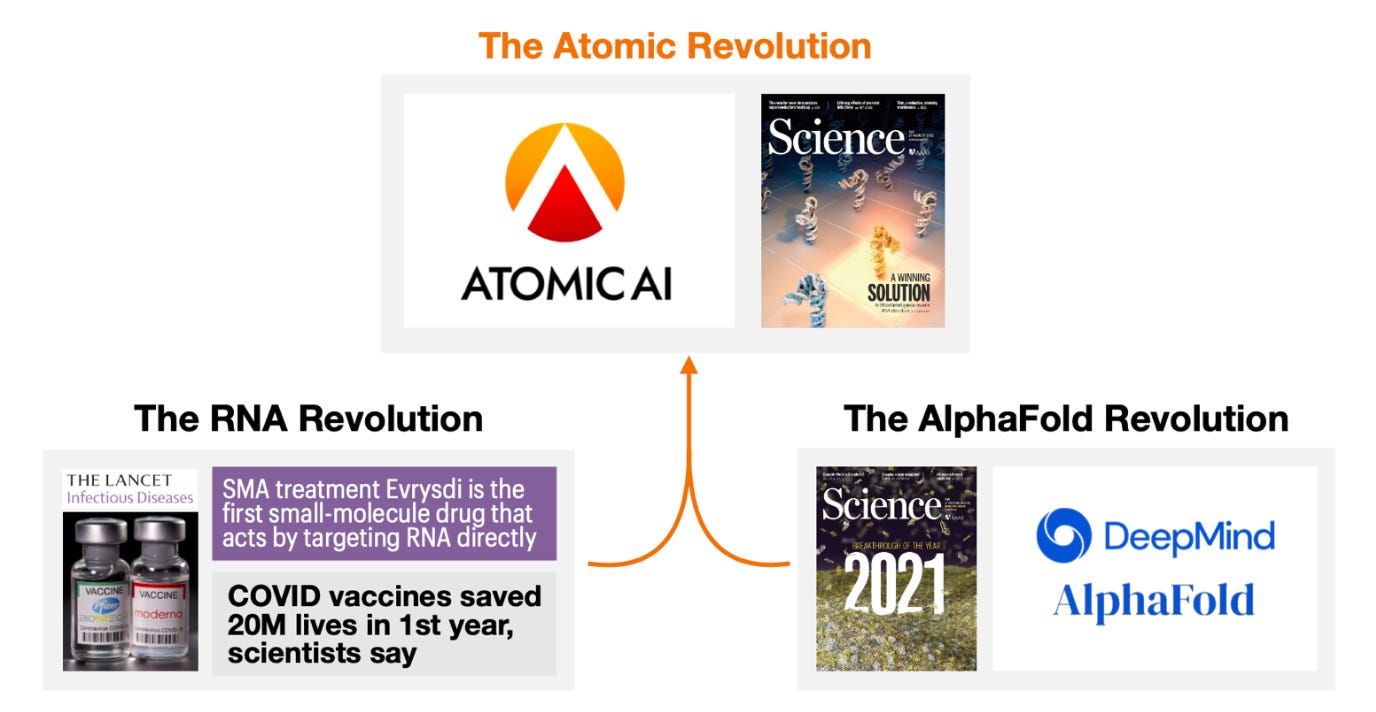
Substack ↗Another example of how a crisis can be beneficial: COVID vaccine technology can be applied to cancer treatment. BioNTech develops mRNA vaccines that bind to markers on tumour cells, stimulating the individual's immune response.
This approach requires analysing the DNA of each patient's tumour cells (neo-antigens). Once the sequence is identified, you can “write” the matching mRNA able to bind to them.
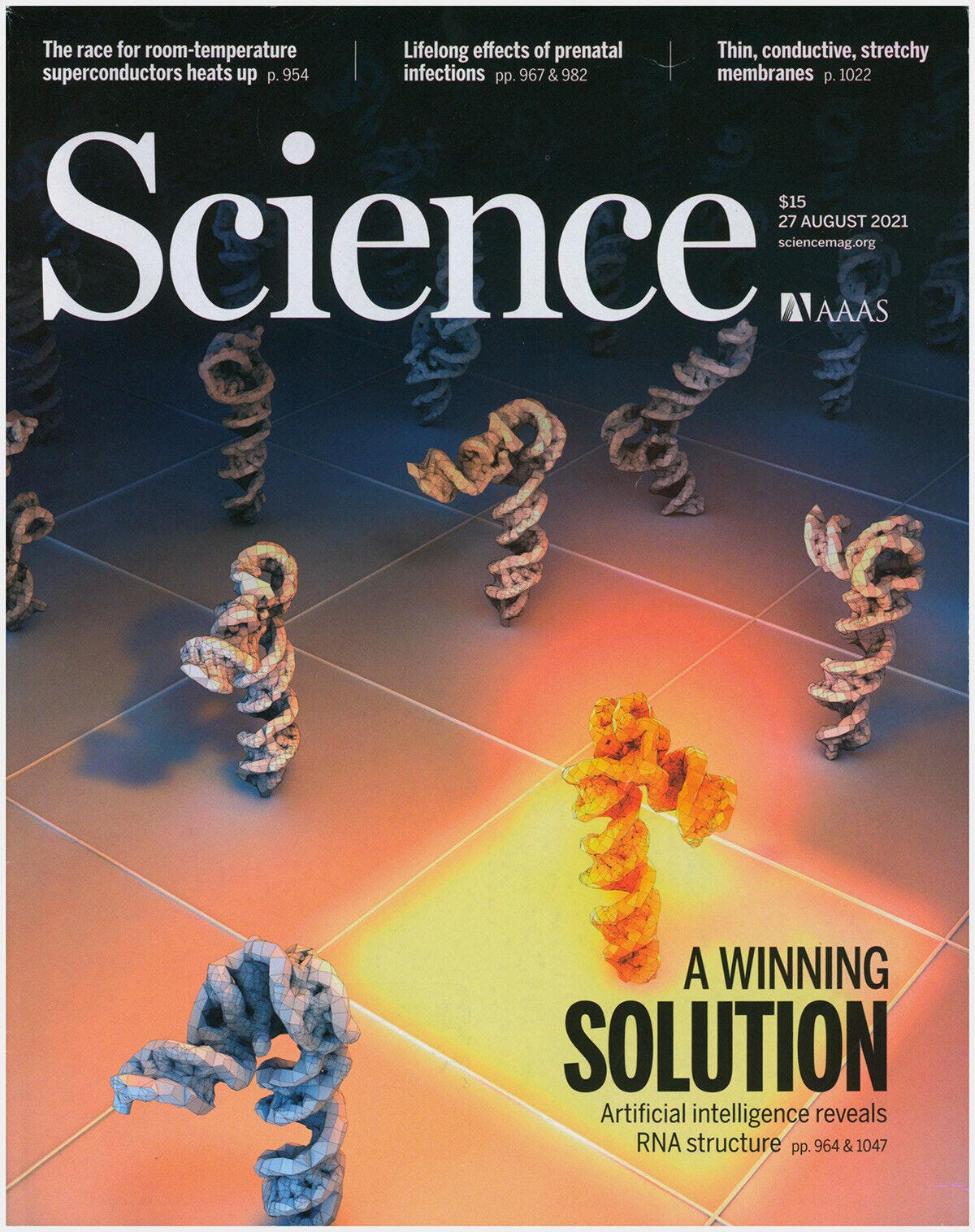
Ouch, it hurts. AI doesn't hurt. AtomicAI is one of the most active companies in this field. A bit like AlphaFold with proteins, its PARSE algorithm speeds up the identification of RNA structures to develop new drugs.
🎵 Final notes
In the future, we'll have blood tests able to detect traces of tumours. If present, after screening their DNA, we'll be given a vaccine to wipe them out. Syringe injections will be as common as pills are today.
In the next 🎼ff we'll talk about the revolution we've ended up in! 👋 See you soon, from micmer
Want to support this project? → Share it with a friend on WhatsApp → Buy me a coffee 😏 → Remember to leave a little heart below.
☕❤️