Futuro Fortissimo Archive
🎼 ff.10 Measuring intelligence
Ever smaller brains, intelligence and consciousness
Published · Michele Merelli
- How can we measure it?
- Are we becoming more “ignorant”? Does Google have something to do with it?
- Consciousness and intelligence: two very different concepts?
Themes🏛 Geopolitics, economy and society📱 Attention, screens and habits🤖 AI, agents and models
🐒 ff.12.1 Homo Sapiens vs Neanderthal
Substack ↗In recent years, various theories have been put forward on why humans (Homo sapiens) won out over their cousin, Homo neanderthalensis.
Neanderthals, more muscular and violent, should have come out on top. And yet, after 8000 years of coexistence (say it with me: eight-thousand-years), in the end Sapiens won.
Why? One hypothesis, put forward by Harari in Sapiens, is that language and the cultural explosion that began around 70,000 years ago gave Homo sapiens a big cultural advantage.
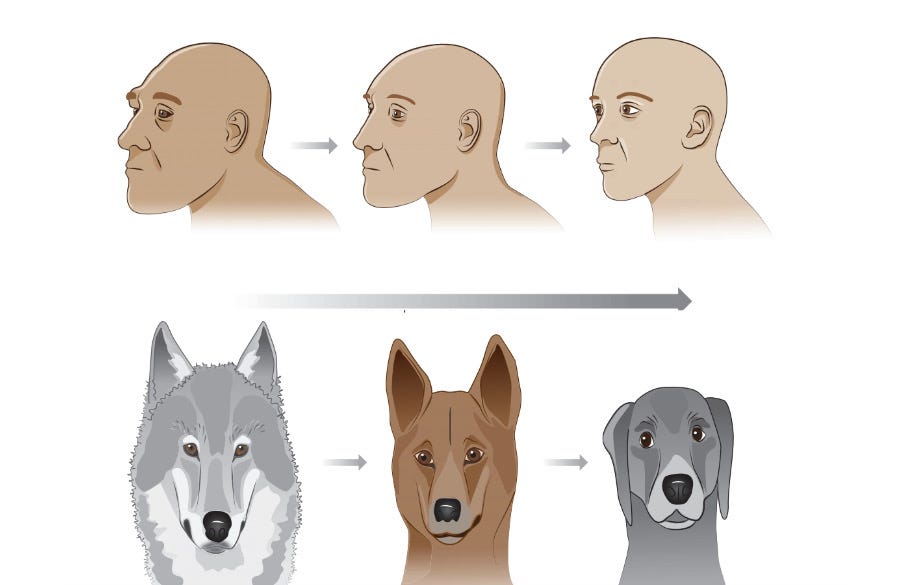
Domesticated: to have a cultural advantage, you need a strong society built on exchanges and experience accumulated from generation to generation. And to live together peacefully, Homo sapiens is perhaps more Homo puppy (a theory of "self-domestication" put forward by Rutger Bregman in Humankind).

🧠 ff.12.2 Brain drain
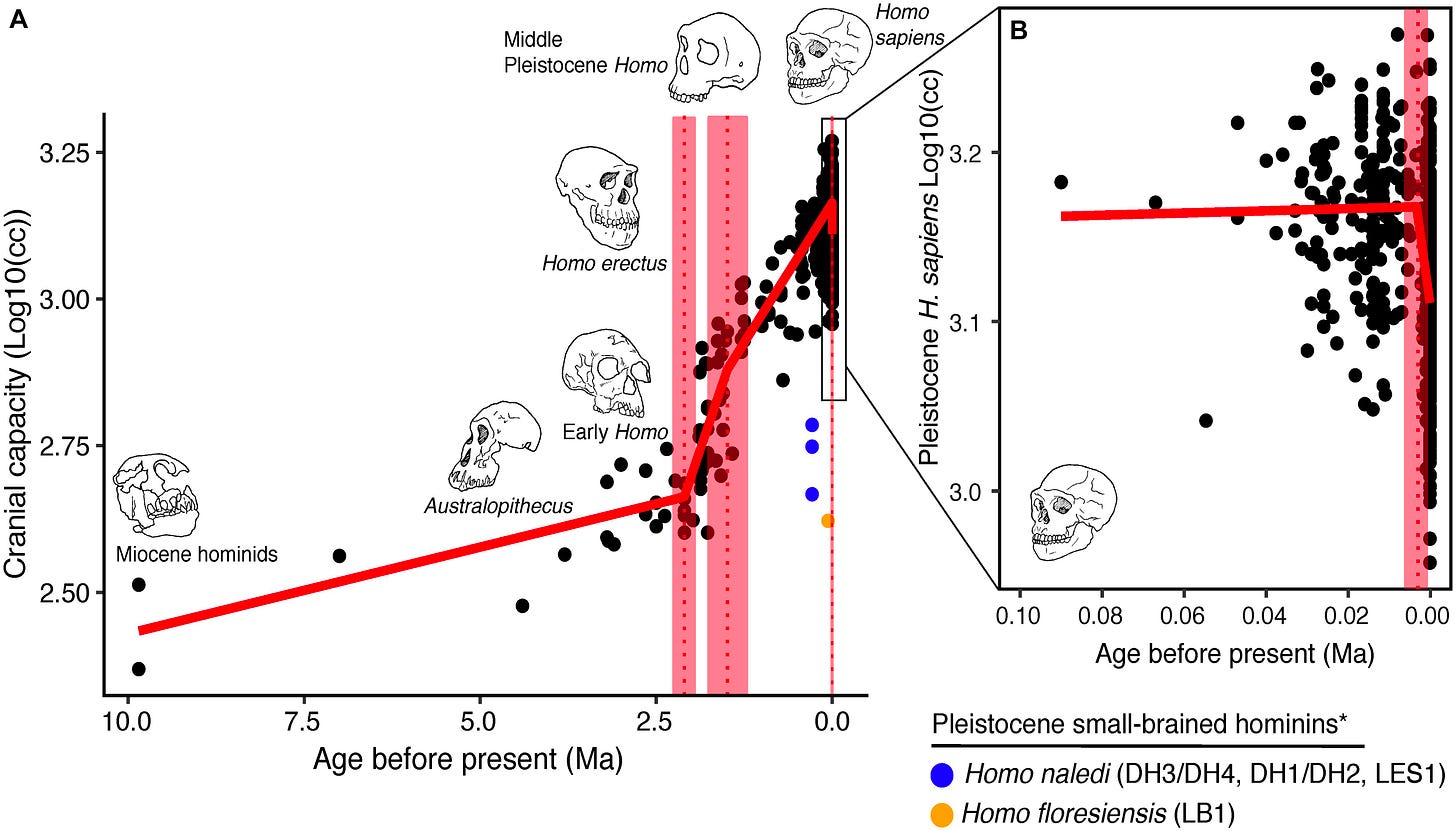
Substack ↗Is social media shrinking our brains? Maybe, but so is society! It seems that precisely because of Homo sapiens' strong social connections, our cognitive capacity has been shrinking over the last 3000 years. No, it's not just Google's and Instagram's fault.
According to the authors, the explanation isn't linked to changes in diet, to the aforementioned "self-domestication" or to a phenomenon linked to reduced body mass, but precisely to the emergence of social structures able to gather information and generate collective knowledge.
👁️ ff.12.3 Consciousness and intelligence
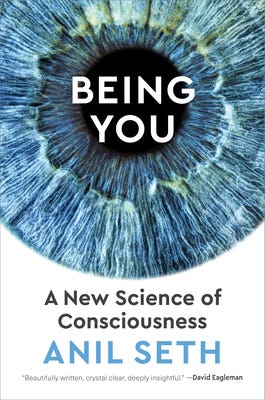
Substack ↗In the following paragraph, I'll share concepts taken from Being You: A New Science of Consciousness, by Anil Seth. One of the best books of 2021 according to The Economist, no small potatoes.
Saying who is intelligent can be difficult. The odds of falling into anthropocentrism are high: the scales and tests we devise to assess the intelligence of other living beings can be too tied to our own arbitrary concept of intelligence.
Mirror, mirror on the wall, who's the most conscious of them all? A test that is often proposed is the mirror test. The idea is that recognising yourself in the mirror is the first step towards building consciousness. Well, among mammals only some great apes, a few dolphins, killer whales and one species of elephant pass it (p. 267).
And yet, monkeys (which don't pass the test) show very "human" behaviour. Let me tell you a story. In an experiment, two monkeys were rewarded for handing back a stone. The first was given a cucumber. It ate it. The second got some juicier grapes. When the first, which had watched the scene, was offered the cucumber again, it threw it away in disgust (p. 269/270).
All mammals are conscious in some way: they have nerve connections very similar to human ones and show various levels of "consciousness" during sleep / anaesthesia / wakefulness similar to those of Sapiens (p. 265).
The reason for these similarities? According to Anil Seth, consciousness arises spontaneously whenever an agent (or rather, the cluster of neurons sitting in the dark box of the skull) has to "build a sensible model" of the inputs it receives, to survive external stimuli. Feeling cold serves to trigger physiological (and non-conscious) warming processes. Hunger and sex follow close behind.
Is Terminator fantasy? For this reason computers won't become conscious overnight, because silicon doesn't have to adapt and "survive" dynamically; it isn't alive, so it isn't conscious.
In rich words:
The beast machine theory grounds experiences ofworld and selfin a biological drive towards physiological integrity – towards staying alive.[…]Every cell in your body – in any body – is continually regenerating the conditions necessaryfor its own integrity over time. The same cannot be saidfor any current or near-future computer, and would not be true evenfor a silicon beast machine ofthe sort I just described. Anil Seth,Being You: A New Science of Consciousness
👘 ff.12.4 By the way, are we really that intelligent?
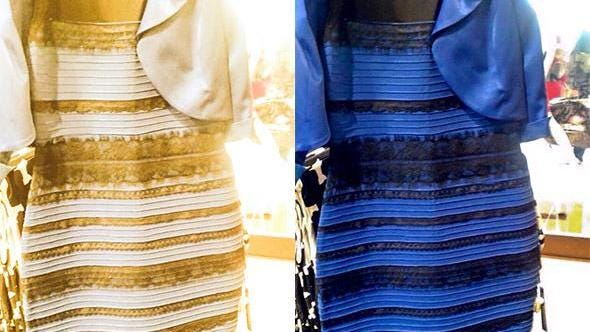
Substack ↗And anyway, are we really that intelligent? There are more and more examples of how our brain alters our perception of reality, trying to make sense of it. Does the image below ring a bell? Colours are perceived based on how the brain thinks the scene is lit. We'll come back to biases and optical illusions in the future, fortissimo, right?
🚭 ff.12.5 Brains up in smoke
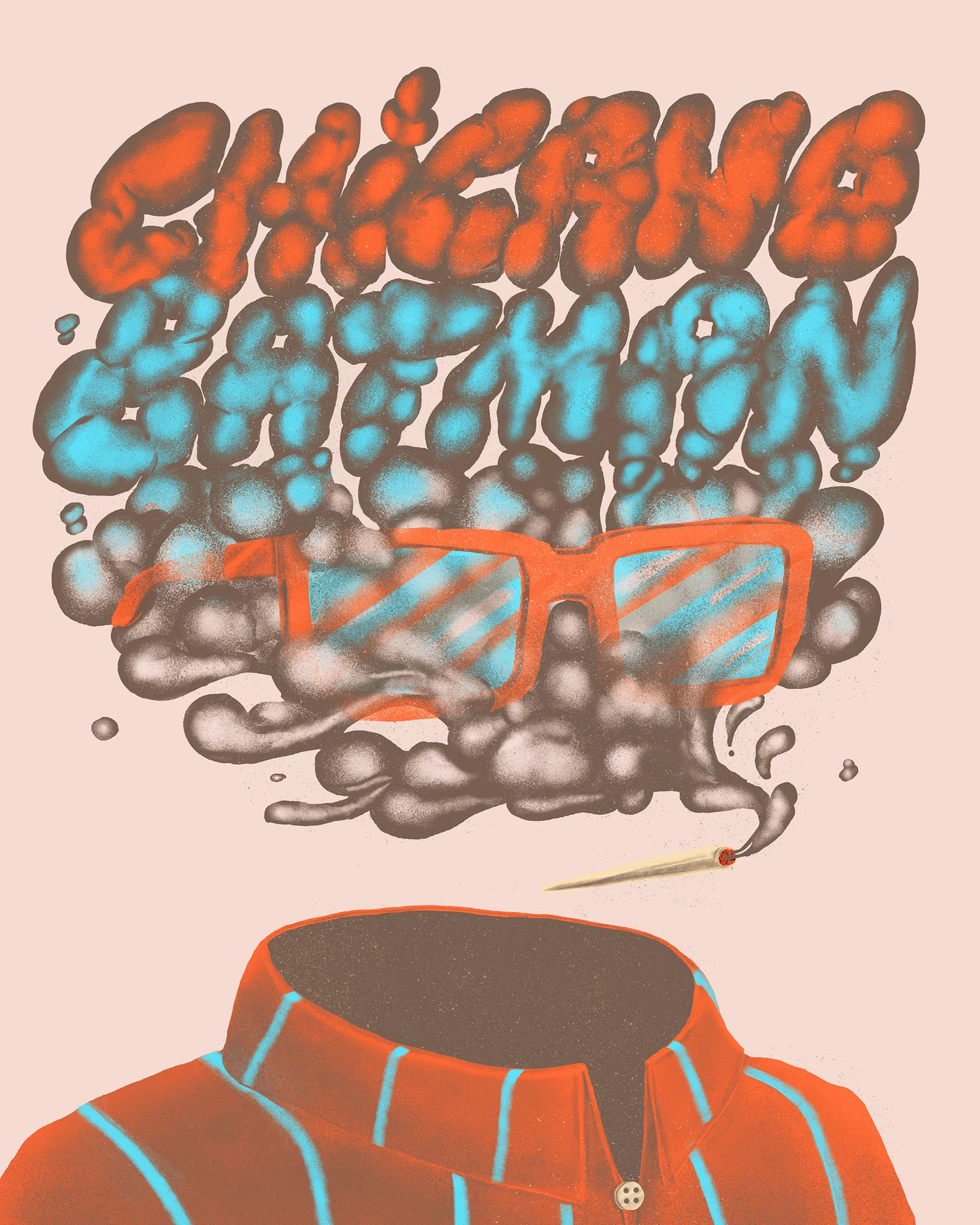
Substack ↗Have I sent your brain up in smoke? Here's a bit of art on the theme of today's ff. A beautiful flyer for a band that, with its music, can bring you back down to earth. Or send you flying for good.
👋 And that's all for this fortissimo week! 🔜 In the next ff we'll talk about populations and pollutions!
See you soon, Michele
Want to support this project? Subscribe to the newsletter and share it with a friend on WhatsApp
👇🔥Subscribe
Or buy me a coffee 😏
☕
And remember to leave a little heart below.
❤️