
Futuro Fortissimo Archive
🎼 ff.51 The religion of the 21st century?
The fine balance between Greta, Greenpeace and hope in the future
Published · Michele Merelli
- Has Nature been idealised?
- Is ecology the religion of the 21st century?
- Are we investing too much in climate change?
💚 ff.51.1 Storytelling for green
Substack ↗Green: a symbol of hope, bucolic, organic, natural. Calcutta would want it “all around”. Let's face it, it's also a bit easy. After all, who'd want “some Lampugnano” all around? Better wide open spaces, “sovrumani silenzi e profondissima quiete” (superhuman silences and deepest quiet).
Science agrees too. Walking in green spaces helps against depression, thanks to reduced mental rumination, or maybe because we breathe in a molecule that knocks down cortisol. And Japanese medicine counts shinrin-yoku, forest bathing, as a cure.
But, but, but. A line from The Eight Mountains made me think a lot. When the city folk meet Bruno, the protagonist's mountain friend points out:
“[…] siete voi di città che la chiamate Natura. È così astratta nella vostra testa che è astratto pure il nome. Noi qui diciamo bosco, pascolo, torrente, roccia, cose che uno può indicare con il dito. Cose che si possono usare. Se non si possono usare, un nome non glielo diamo perché non serve a niente.”Paolo Cognetti,Le otto montagne
So I start to suspect that, in our digital/anthropic frenzy, we're idealising nature. And, as a result, the issue of climate change.
So let me try to spark a somewhat “against the grain” reflection on climate, using numbers and percentages. Shades other than 1/0. Other than all or nothing. Other than black and white.



🛐 ff.51.2 Ecology = religion?
Substack ↗Perhaps nature is the religion of the 21st century. Climate change the God who controls us, and sin is what we feel when we eat one steak too many.
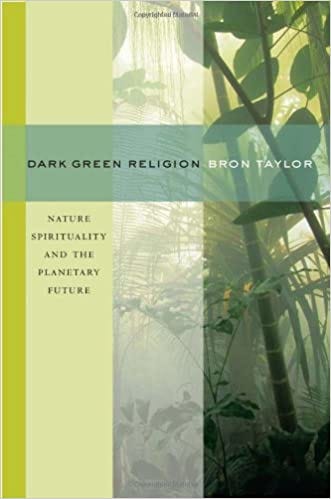
In Dark Green Religion, Bron Taylor (professor of religion and nature at the University of Florida) tries to articulate the theme in more detail.
He cites the thinking of a naturalist, John Burroughs, who draws important parallels between nature and spirituality.
Non andiamo in Chiesa tanto frequentemente come i nostri genitori, ma ci immergiamo nel verde molto più di loro, quasi identificando gli alberi come un tempio laico. John Burroughs,The Gospel Of Nature.
By elevating ecology to a religion, we could act irrationally, forgetting the need for critical thinking and quantitative analysis. Let's look at a glaring example.
(Green) peace be with you. Greenpeace, according to its co-founder, has become an ideological monster. Born to raise awareness about whaling and atmospheric nuclear tests, it ended up protesting unscientifically against chlorine (Carthago delenda est).
🔥 ff.51.3 I'm your heretic dream
Substack ↗I found an episode of the podcast that intrigues me most, Lex Fridman's, uncomfortable but also eye-opening.
In his typical 4 hours, Lex talks about climate change and its socio-economic impact with Bjørn Lomborg (author of False Alarm) and Andrew Revkin (21 years at the NYT). Some takeaways:
Contrary to popular belief, “extreme” events aren't increasing: we're better at monitoring them and they hit more people because of the urbanisation of critical areas (COVID exemplifies both: molecular tests, and densely populated areas that amplify the damage at equal risk). Cutting temperatures and CO2 isn't the only solution: we can use better prevention and monitoring systems (an earthquake can have totally different effects depending on the precautions taken). Every dollar spent on education brings a 45x return; invested in fighting malaria and tuberculosis (1.5 million deaths a year) 42x; on climate change 10x. In numerical terms, climate change could bring a 0.7-2.4% annual reduction from now to 2100 (for the US), so at most we're talking about the cost of legal disputes (2.4% of GDP in 2016).
Let me repeat: climate change is a serious issue and needs to be studied in detail (if you like, here's a 40-page summary from the Intergovernmental Panel on Climate Change).
Population ageing, diet, lifestyles, mental health, bureaucracy, wage distribution and migration: all issues that can impact socio-economic development (positively or negatively) more than climate change.
Olympus. If the analogy with religion holds, perhaps we should at least move from a natural monotheism to a social polytheism, weighing in due proportion every aspect of our complex, stimulating and ever faster society.
🎵 Final notes
Coming soon: a world religion that forbids smoking, travelling more than 1000 km a month, eating meat, burning wood.
In the next 🎼ff we'll talk about the (network) city-states of the future! 👋 See you soon, from micmer
Want to support this project? Subscribe to the newsletter and share it with a friend on WhatsApp
👇🔥Subscribe
Or buy me a coffee 😏
☕
And remember to leave a little heart below.
❤️

